
"The Opera Ghost really existed...
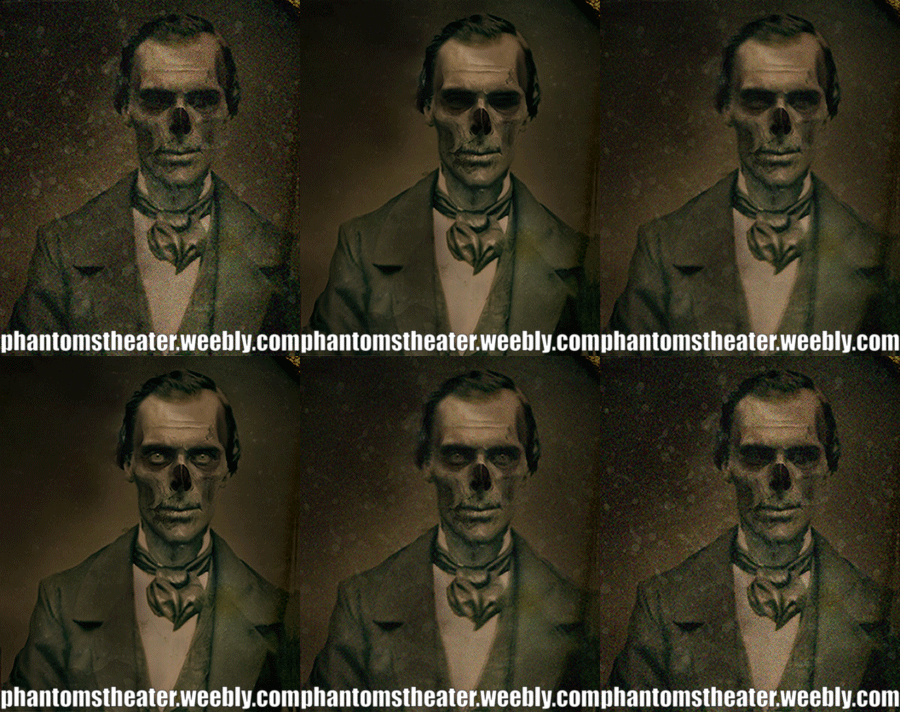
created by me
...He was not, as was long believed, a
creature of the imagination of the artists." ~Leroux
creature of the imagination of the artists." ~Leroux
Do you believe the "Le Fantôme de l'Opéra" really existed? Have you always felt like there had to be some truth behind it? If this sounds like you, well, you have come to the right place. From the moment I read those opening words to Gaston Leroux's novel I knew there was something more to this story then just a work of fiction. There was just too much evidence pointing to the fact the story was based on truth as well as Gaston's own admission. Some fans over the years have tried to say it's based on half truths that Gaston used his skills in journalism and mixed in enough truth to make people think it is true. But saying such things is only half true in and of its self. The reality is way more complicated. In the French Gaston says he only knew so much and had to add from other sources a lot of the time he makes it rather obvious when something has been borrowed. If Gaston was going on just a rumor that there was a ghost in an opera and was only able to find so much viable proof, he would have to weave a fictional story around what he knew, which wasn't much. Why wouldn't he draw on famous singers and articles of the time, it would make it more believable yes. Keep in mind people would have been much more familiar with these references at the time of publication. So yes half truth is correct, but the reason behind it is not accurate. Gaston even said himself he had to hide the real identity of "that adorable child from the North"as he put it, behind the name of "Christine Daaé" we know a huge inspiration was Christine Nilsson. Up until the end Gaston still claimed the Phantom was not just a work of the imaginations of the artist of the Paris Opera House. Even if you believe it was only a work of fiction or "half truth."
I invite you to
step with me back in time, Walk through the halls of the Opera see if you can hear the foot steps in the hall or catch a glimpse of a shadow, or hear an eerie echo down a corridor of a young soprano being taught in her dressing room by her 'Ange de Musique'. See if you run into a Persian man lurking around the opera who was simply known to us as Daroga and what of the love sick Raoul de Chagny? Here there is more then enough evidence to prove to you the Phantom was not just simply made up.
I invite you to
step with me back in time, Walk through the halls of the Opera see if you can hear the foot steps in the hall or catch a glimpse of a shadow, or hear an eerie echo down a corridor of a young soprano being taught in her dressing room by her 'Ange de Musique'. See if you run into a Persian man lurking around the opera who was simply known to us as Daroga and what of the love sick Raoul de Chagny? Here there is more then enough evidence to prove to you the Phantom was not just simply made up.
| Gaston Leroux | Érik | Christine Daaé | Daroga | Raoul | Chagny Family |
| Opéra House | Chandelier | History & Timeline | Real Places | Real People |
| Bal Masqué |
| Inventions | Little Lotte | Art Styles | Opéras in the Story | Other Possible Influences |
| Opéra House | Chandelier | History & Timeline | Real Places | Real People |
| Bal Masqué |
| Inventions | Little Lotte | Art Styles | Opéras in the Story | Other Possible Influences |
**Disclaimer**
~~~~This page is a work in Progress~~~~
This is all my working notes on the truth behind the story Leroux wrote. It's taken years of research starting in the 90's, transcribing and documenting to acquire all the notes I have. When at all possible I have given credit to the sites and documents that I used. Anything that was once in French was translated by me to the best of my ability. I claim none of this as my own information unless other wise stated. I am merely documenting it for posterity so Phans can know the truth if they so wish. I took the time to compile all of this so have some respect and DO NOT STEAL!!! If you would like to reuse any of this information please directly link to this page or it's respectful original authors.
~~~~This page is a work in Progress~~~~
This is all my working notes on the truth behind the story Leroux wrote. It's taken years of research starting in the 90's, transcribing and documenting to acquire all the notes I have. When at all possible I have given credit to the sites and documents that I used. Anything that was once in French was translated by me to the best of my ability. I claim none of this as my own information unless other wise stated. I am merely documenting it for posterity so Phans can know the truth if they so wish. I took the time to compile all of this so have some respect and DO NOT STEAL!!! If you would like to reuse any of this information please directly link to this page or it's respectful original authors.
Gaston Leroux
From a page of Leroux's notes for Le Fantôme de l'Opéra has a diffarent name written for Christine Daaé which has been crossed out and Christine Daaé is written above. Hiting once again that Christine was not her real name nor orginal name and that she wasn't just strickly based off of Christina Nilsson. It's Possible he got the name Pauline from the singer Pauline Viardot.

The name Pauline Ballini is crossed out and Christine Daaé is written above it.
|

to the top
Érik's Voice Type
I have had servile discussions with phans about the diffarent voices Erik used for the diffarent personas he assumed. First we have Érik, the genius composer, architect, magician, assassin, abused child, exhibited, man who lived bellow ground, then you have the Phantom, the ghost who haunts the Opera house halls and stage, who sits in box five, who demands his allowance who scares the little ballareinas, and who gives orders on how to run the show, then we have the angel of music, who taught Christine in a soft voice, who plaid exotic instruments and who came from on high just to teach a talented although melancholy present's daughter to sing like the angels in heaven. So we have the:
Erik
The Phantom
&
The Angel of music
Mysteriously Christine repeatedly refers to the Angel of Music as a female in the original French text, probably hinting at a higher register
or falsetto range to Erik's voice.
The Voice of the Angel of music
"la Voix”
In reference to the angel
•
"et il me fut impossible de trouver la voix hors de ma loge, tandis qu’elle restait fidèlement dans ma loge. Et non seulement, elle chantait, mais elle me parlait, elle répondait à mes questions comme une véritable voix d’homme, avec cette différence qu’elle était belle comme la voix d’un ange. " ~13 La lyre d’Apollon
"And it was impossible for me to hear the voice outside my room, while it remained only in my room. And not only did it sing, but it spoke to me, it answered my questions like a true man's voice, with the difference that it was as beautiful as the voice of an angel."
•
This hints at least that he had a higher range more simular to a female then a male. Which is the voice he clearly used for the Angel of Music, probably to appear more angelic and etherial and less human. This means he probably had a high tenor called a countertenor or was at least able to use his falsetto, which is normally used by countertenors to sing into alto or soprano range.
Description of his voice by Daroga
“…la voix d’Érik - qui était retentissante comme le tonnerre ou douce comme celle des anges”
~22 Interesting and instructive tribulations of a Persian in the undersides of the Opera Narrative of the Persian
“Erik’s voice was resounding like thunder or sweet like that of angels”
"Il avait saisi une harpe et il commença de me chanter, lui, voix d’homme, voix d’ange, la romance de Desdémone. "
He had seized a harp and he began to sing to me, he, the voice of a man, the voice of an angel, the romance of Desdemona.
The Voice of Érik
“…la voix de tonnerre d’Érik.”
~ 23 In the Chamber of Torture. Continuation of the narrative of the Persian.
“Erik’s voice of thunder”
“Il chantait comme le dieu du tonnerre”
~ 23 In the Chamber of Torture. Continuation of the narrative of the Persian.
“He sang like the god of thunder”
....sa voix était tonnante, son âme vindicative se portait sur chaque son, et en augmentait terriblement la puissance. L’amour, la jalousie, la haine, éclataient autour de nous en cris déchirants. Le masque noir d’Érik me faisait songer au masque naturel du More de Venise. Il était Othello lui-même. "
~The lyre of Apollo
"His voice was thundering, his soul was vindictive with every sound, and its power increased terribly. Love, jealousy, and hatred broke out around us in heart-rending cries. The black mask of Erik reminded me of the natural mask of the More of Venice. He was Othello himself."
This hints that he had a deeper range to his voice as well as a higher tenor. There are two Othello Opera's from aroung the time. Gioachino Rossini's 1816 Otello and Giuseppe Verdi's 1887 Othello. Now according to Gaston the whole story took place in 1881. So Verdi is out, which is a shame it's a better work.
Rossini's Otello
voice range is opera tenor or a lyric tenor.
Description for the quility required for a lyric tenor.
"The lyric tenor is a warm graceful voice with a bright, full timbre that is strong but not heavy and can be heard over an orchestra"
Just for fun
Verdi's Othello
The voice type required is a dramatic tenor/heldentenor
Description for the quility required for a dramatic tenor.
Also called "tenore di forza" or "robusto", the dramatic tenor has an emotive, ringing and very powerful, clarion, heroic tenor sound.
Description for the quility required for a heldentenor
The heldentenor (English: heroic tenor) has a rich, dark, powerful and dramatic voice. As its name implies, the heldentenor vocal fach features in the German romantic operatic repertoire. The heldentenor is the German equivalent of the tenore drammatico, however with a more baritonal quality: the typical Wagnerian protagonist.
The Voice of the Phantom
la Sirène/ The Siren
"Et surtout, bouchez-vous les oreilles si vous entendez chanter la Voix sous l’eau, la voix de la Sirène"
"And especially, close your ears if you hear singing, the voice under the water, the voice of the Siren."
Even Daroga is saying the siren sounds female. Which further cements a countertenor. This also seems to hint Erik indeed has some hypnotic qualities to his voice if even a man such as the Daroga, who is familiar with his tricks, is warning Raoul and indeed himself to not listen to the Siren's singing.
•
Singing in two pitches at the same time
So we can assume from the original text Erik was perfectly capable of sining more then a three octave range probably more close to a 4 octave range. We also know he traveled the world and most likely picked up a few trick along the way vocally and musically. Is it possible that Erik even learned hose to sing with both sets of vocal cords? This could also explain the hypnotic, etherial quility to his voice.
There is something called overtone singing, overtone chanting, harmonic singing or throat singing. Which is a type of singing that manipulates the resonance to produce a melody. This effect creates more then one pitch at the same time. This technique is taught all over and it's not hard to image Erik learning it on his travels and eventually mastering it. It was taught in Mongolia which is where it originated from. Where is also most active place for it's use in the world. The most common style is called Khöömii and is devided into catagories.
uruulyn / labial khöömii
tagnain / palatal khöömii
khamryn / nasal khöömii
bagalzuuryn, khooloin / glottal, throat khöömii
tseejiin khondiin, khevliin / chest cavity, stomach khöömii
turlegt or khosmoljin khöömii / khöömii combined with long song
It's also taught in Tuva Siberia, Russia. We know that Erik indeed at least went through Russian it's possible he picked it up there or even in Asia.
"He was seen at the fair of Nizhni Novgorod ( Moscow, Russia), where he displayed himself in all his hideous glory. He already sang as nobody on this earth had ever sung before;..."~Epilogue.
Giuseppe Verdi 1887
Role Desdemona lyric soprano
Otello Gioachino Rossini 1816 Italian
Role Desdemona Mezzo-soprano
Sings with both vocal cords Tibetan monks can sing more then one note
https://en.m.wikipedia.org/wiki/Overtone_singing
http://www.scena.org/lsm/sm2-9/sm2-9Nomads.html
Originated in Mongolia and Buryatia
Tuva people of southern Siberia, Russia.
Pakistan, Iran and Afghanistan
Types if voices http://www.theopera101.com/operaabc/voices/
I have had servile discussions with phans about the diffarent voices Erik used for the diffarent personas he assumed. First we have Érik, the genius composer, architect, magician, assassin, abused child, exhibited, man who lived bellow ground, then you have the Phantom, the ghost who haunts the Opera house halls and stage, who sits in box five, who demands his allowance who scares the little ballareinas, and who gives orders on how to run the show, then we have the angel of music, who taught Christine in a soft voice, who plaid exotic instruments and who came from on high just to teach a talented although melancholy present's daughter to sing like the angels in heaven. So we have the:
Erik
The Phantom
&
The Angel of music
Mysteriously Christine repeatedly refers to the Angel of Music as a female in the original French text, probably hinting at a higher register
or falsetto range to Erik's voice.
The Voice of the Angel of music
"la Voix”
In reference to the angel
•
"et il me fut impossible de trouver la voix hors de ma loge, tandis qu’elle restait fidèlement dans ma loge. Et non seulement, elle chantait, mais elle me parlait, elle répondait à mes questions comme une véritable voix d’homme, avec cette différence qu’elle était belle comme la voix d’un ange. " ~13 La lyre d’Apollon
"And it was impossible for me to hear the voice outside my room, while it remained only in my room. And not only did it sing, but it spoke to me, it answered my questions like a true man's voice, with the difference that it was as beautiful as the voice of an angel."
•
This hints at least that he had a higher range more simular to a female then a male. Which is the voice he clearly used for the Angel of Music, probably to appear more angelic and etherial and less human. This means he probably had a high tenor called a countertenor or was at least able to use his falsetto, which is normally used by countertenors to sing into alto or soprano range.
Description of his voice by Daroga
“…la voix d’Érik - qui était retentissante comme le tonnerre ou douce comme celle des anges”
~22 Interesting and instructive tribulations of a Persian in the undersides of the Opera Narrative of the Persian
“Erik’s voice was resounding like thunder or sweet like that of angels”
"Il avait saisi une harpe et il commença de me chanter, lui, voix d’homme, voix d’ange, la romance de Desdémone. "
He had seized a harp and he began to sing to me, he, the voice of a man, the voice of an angel, the romance of Desdemona.
The Voice of Érik
“…la voix de tonnerre d’Érik.”
~ 23 In the Chamber of Torture. Continuation of the narrative of the Persian.
“Erik’s voice of thunder”
“Il chantait comme le dieu du tonnerre”
~ 23 In the Chamber of Torture. Continuation of the narrative of the Persian.
“He sang like the god of thunder”
....sa voix était tonnante, son âme vindicative se portait sur chaque son, et en augmentait terriblement la puissance. L’amour, la jalousie, la haine, éclataient autour de nous en cris déchirants. Le masque noir d’Érik me faisait songer au masque naturel du More de Venise. Il était Othello lui-même. "
~The lyre of Apollo
"His voice was thundering, his soul was vindictive with every sound, and its power increased terribly. Love, jealousy, and hatred broke out around us in heart-rending cries. The black mask of Erik reminded me of the natural mask of the More of Venice. He was Othello himself."
This hints that he had a deeper range to his voice as well as a higher tenor. There are two Othello Opera's from aroung the time. Gioachino Rossini's 1816 Otello and Giuseppe Verdi's 1887 Othello. Now according to Gaston the whole story took place in 1881. So Verdi is out, which is a shame it's a better work.
Rossini's Otello
voice range is opera tenor or a lyric tenor.
Description for the quility required for a lyric tenor.
"The lyric tenor is a warm graceful voice with a bright, full timbre that is strong but not heavy and can be heard over an orchestra"
Just for fun
Verdi's Othello
The voice type required is a dramatic tenor/heldentenor
Description for the quility required for a dramatic tenor.
Also called "tenore di forza" or "robusto", the dramatic tenor has an emotive, ringing and very powerful, clarion, heroic tenor sound.
Description for the quility required for a heldentenor
The heldentenor (English: heroic tenor) has a rich, dark, powerful and dramatic voice. As its name implies, the heldentenor vocal fach features in the German romantic operatic repertoire. The heldentenor is the German equivalent of the tenore drammatico, however with a more baritonal quality: the typical Wagnerian protagonist.
The Voice of the Phantom
la Sirène/ The Siren
"Et surtout, bouchez-vous les oreilles si vous entendez chanter la Voix sous l’eau, la voix de la Sirène"
"And especially, close your ears if you hear singing, the voice under the water, the voice of the Siren."
Even Daroga is saying the siren sounds female. Which further cements a countertenor. This also seems to hint Erik indeed has some hypnotic qualities to his voice if even a man such as the Daroga, who is familiar with his tricks, is warning Raoul and indeed himself to not listen to the Siren's singing.
•
Singing in two pitches at the same time
So we can assume from the original text Erik was perfectly capable of sining more then a three octave range probably more close to a 4 octave range. We also know he traveled the world and most likely picked up a few trick along the way vocally and musically. Is it possible that Erik even learned hose to sing with both sets of vocal cords? This could also explain the hypnotic, etherial quility to his voice.
There is something called overtone singing, overtone chanting, harmonic singing or throat singing. Which is a type of singing that manipulates the resonance to produce a melody. This effect creates more then one pitch at the same time. This technique is taught all over and it's not hard to image Erik learning it on his travels and eventually mastering it. It was taught in Mongolia which is where it originated from. Where is also most active place for it's use in the world. The most common style is called Khöömii and is devided into catagories.
uruulyn / labial khöömii
tagnain / palatal khöömii
khamryn / nasal khöömii
bagalzuuryn, khooloin / glottal, throat khöömii
tseejiin khondiin, khevliin / chest cavity, stomach khöömii
turlegt or khosmoljin khöömii / khöömii combined with long song
It's also taught in Tuva Siberia, Russia. We know that Erik indeed at least went through Russian it's possible he picked it up there or even in Asia.
"He was seen at the fair of Nizhni Novgorod ( Moscow, Russia), where he displayed himself in all his hideous glory. He already sang as nobody on this earth had ever sung before;..."~Epilogue.
Giuseppe Verdi 1887
Role Desdemona lyric soprano
Otello Gioachino Rossini 1816 Italian
Role Desdemona Mezzo-soprano
Sings with both vocal cords Tibetan monks can sing more then one note
https://en.m.wikipedia.org/wiki/Overtone_singing
http://www.scena.org/lsm/sm2-9/sm2-9Nomads.html
Originated in Mongolia and Buryatia
Tuva people of southern Siberia, Russia.
Pakistan, Iran and Afghanistan
Types if voices http://www.theopera101.com/operaabc/voices/

to Erik
The Number 5
The number 5 plays a big role in the novel from box five to Érik living in the 5th cellar of the Opera house. Why number 5 though. It is likely Érik learned spiritualism from his time with the Gypsies and travels across the world and no doubt he came across numerology, Gematria and Isopsephy. Knowing the numbe 5 keeps showing up it must have meant something to Érik. In Gematria the number five means harmony and balance also the number of divine grace. This also connects with the Dies iræ which was scrolled all over the walls of his room. Number 5 according to the Kabbalah is the number of the perfect man and man-god, but it also the number of man it's self. The Charrot states the number 5 represents , "a solar ray pouring on the earth its beneficial rain of life" and it symbolizes the universal life. It's also is the number of God's grace. Once again the theme of life and death, grace and resurrection.

to Erik
Érik family of origin
Erik was said to be born "in a small town not far from Rouen near where Joan of Arc was executed. See Pictures of Rouen.
Please click here for more information

to Erik
Erik's mask

He was said to have worn a full face black mask made of silk.
Je ne pouvais voir les yeux derrière le masque
et ceci n'était point pour diminuer
l'étrange sentiment de malaise
que l'on avait à interroger ce
mystérieux carré de soie noire ; mais sous l'étoffe, à
l'extrémité de la barbe du masque, apparurent une, deux, trois, quatre larmes.
tears ~12. Apollo's Lyre
"... I could not see his eyes behind the mask
and it was not helping to diminish
the strange feeling of unease
that I had. One had to question this mysterious black piece of silk upon his face;
but under the fabric, near where a beard would be, on the chin,
appeared one, two, three, four tears." ~12. Apollo's Lyre (my translation)
I was dragged
toward the little red light and then I saw that I was in the hands
of a man wrapped in a large cloak and wearing a mask that hid
his whole face. I made one last effort; my limbs stiffened,
my mouth opened to scream, but a hand closed it, a hand which I
felt on my lips, on my skin...a hand that smelt of death.
Then I fainted away. ~de Mattos (translation)
with my head on the knee
of the man in the black cloak and the black mask. He was bathing
my temples and his hands smelt of death.
"Erik's black mask made me think of the natural mask of the Moor of Venice. He was Othello himself."
Types of mask

created by me

to Erik
Erik's Name
"I asked him what his nationality was and if that name
of Erik did not point to his Scandinavian origin. He said that he
had no name and no country and that he had taken the name of Erik
by accident."
It is revealed that "Érik" was not, in fact, his birth name, but one that was given or found by accident
The name Erik in and of its self is interesting. The name's meaning:
Forever strong
Ever Powerful
Eternal ruler
rich
Prince
Erik is derived from the Old Norse name Eiríkr. Virtually translating to Ei "one" or "alone" and rík(a)z "ruler" or "prince" The most common spelling in Scandinavia is Erik, which is probably why Christine asks him if that is his country of origin. That is a lot to live up to. Did Erik happen upon this name really by accident or did he take it for himself we will never really know. Sadly what Erik's birth name was is left up in the air.
Also make sure you check out
Erik's possible family of origin
Nick names
le prince des étrangleurs / Prince of Stranglers
le roi des prestidigitateurs / King of the Conjurers
l’Ange de la musique / Angel of Music (Christine)
ange de l’Opéra/ Angel of the Opera
Fantôme de l'Opéra / F. de l'O. / F. de l'Opéra /Phantom of the Opera
O. G. / Opera Ghost ironically does not appear anywhere in the original French novel. This was invented by de Mattos who was the first to translated it into English and became popular through ALW's musical. He signs his notes Fdl'O.
Fantôme / Phantom * 1. Supernatural apparition of a dead person.
synonyms: spirit, returning, spectrum
2. to the figurel littary
What only has the appearance (of a person, of a thing).
synonyms: sham
3. Character or thing that haunts the mind, the memory.
The ghosts of the past.
l’amateur de trappes/ Trap-door lover
/ master of the trap door
mort vivant/ living dead (was shown as in the Freak show)
dieu/ a god (Daroga)
vile canaille/ vile fiend/blackguard, contemptible villain (Daroga)
monstre/ monster (Daroga)
extraordinaire crapule/ extraordinary scoundrel (Daroga)
démon/ demon (said to laugh like a drunken demon)
La Mort Rouge/ Red Death (Masqurade)
Don Juan triomphant/ Don Juan Triumphant
God of thunder/ le dieu du tonnerre (Said to have sung like)
La Sirène / translates to Mermaid, but more accurately Siren
bon génie/ good genius (given by mama Valérius) * Eudaemon, eudaimon, or eudemon (Greek: εὐδαίμων) in Greek mythology was a type of daemon or genius (deity), which in turn was a kind of spirit. An eudaemon was regarded as a good spirit or angel, and the evil cacodaemon was its opposing spirit. (ref. Wiki)
génie de la musique/ genius of music
l'ombre/ The shadow
Shadow of the East
Sand Sorcerer
O bengalo gav,
Kagekitsune Shichirou.
龙之使者 (Lóng zhī Shǐzhě) translates to "Envoy of the Dragon"
“Gölge Büyücüs” (shadow sorcerer Turkish)
How he signed his name
comme votre très humble et très obéissant serviteur.
Signé… F. de l’Opéra./
as your most humble and obedient servant. Sign… F. de l’Opéra
Serviteur F. de l’O. / Servant F. de l’O.
Bien cordialement vôtre. F. de L’O. /Sincerely Yours F. de L’O. (The Magic Envelope)

to Erik

© Phantomstheater
Physical Appearance & Deformities the Living Skeleton
Description from the novel
Le fantôme leur était apparu sous les espèces d'un monsieur en habit noir. ~1 Est-ce le fantôme ?
The ghost appeared to them in the form of a gentleman in a black tailed coat. ~ 2 Is it a Ghost?
•
Au fond, qui l’avait vu ? On peut rencontrer tant d’habits noirs à l’Opéra qui ne sont pas des fantômes. Mais celui-là avait une spécialité que n’ont point tous les habits noirs. Il habillait un squelette. Du moins, ces demoiselles le disaient. Et il avait, naturellement, une tête de mort. Tout cela était-il sérieux ? La vérité est que l’imagination du squelette était née de la description qu’avait faite du fantôme, Joseph Buquet, chef machiniste, qui, lui, l’avait réellement vu. Il s’était heurté, – on ne saurait dire « nez à nez », car le fantôme n’en avait pas, – avec le mystérieux personnage dans le petit escalier qui, près de la rampe, descend
~1 Est-ce le fantôme ?
In truth, who had seen him? One does see so many men in black dress clothes at the Opera that are not ghosts. But this dress-suit was particular only to the phantom, for it covered a skeleton's frame. At least, these young ladies said so. And he had, of course, a death's head (skull). Was this all serious? The truth of the matter was this was a product of the imagination of the skeleton was born from the description of the ghost, Joseph Buquet, chief machinist, who had actually seen it. He had come up against it-one could not say "nose-to-nose," for the ghost had none-with the mysterious personage in the little staircase which, near the ramp, descends directly to the "undersides." He had had time to see her for a second-for the phantom had fled-and had preserved an indelible memory of that vision.
~ 2 Is it a Ghost?

•
Et voilà que soudain, dans le noir, une main se posait sur la mienne… ou, plutôt, quelque chose d’osseux et de glacé qui m’emprisonna le poignet et ne me lâcha plus. Je criai. Un bras m’emprisonna la taille et je fus soulevée… Je me débattis un instant dans de l’horreur ; mes doigts glissèrent au long des pierres humides, où ils ne s’accrochèrent point. Et puis, je ne remuai plus, j’ai cru que j’allais mourir d’épouvante. On m’emportait vers la petite lueur rouge ; nous entrâmes dans cette lueur et alors je vis que j’étais entre les mains d’un homme enveloppé d’un grand manteau noir et qui avait un masque qui lui cachait tout le visage… Je tentai un effort suprême : mes membres se raidirent, ma bouche s’ouvrit encore pour hurler mon effroi, mais une main la ferma, une main que je sentis sur mes lèvres, sur ma chair… et qui sentait la mort ! Je m’évanouis. ~13 La lyre d’Apollon
And suddenly, in the dark, a hand was placed on mine ... or, rather, something boney and icy took hold of my wrist and did not let go. I cried out. An arm took me by the waist and I was lifted up.... I struggled for a moment in horror; My fingers slid along the damp stones, where they could not grasp anything. And then I did not move any further, I thought that I was going to die of fright. I was carried away towards the little red glow; We entered into this light and then I saw that I was in the hands of a man enveloped in a large black cloak who had a mask that hid his whole face ... I tried with a great effort: but my limbs themselves stiffened. My mouth opened again to scream, oh my terror, but a hand closed it, a hand that I felt on my lips, on my flesh ... and that smelled of death! I fainted. ~12 Apollo's Lyre
•
Une ombre, enveloppée d’un grand manteau noir, et coiffée d’un chapeau de feutre mou noir, passa sur le trottoir entre la Rotonde et les équipages. Elle semblait considérer plus attentivement la berline. Elle s’approcha des chevaux, puis du cocher, puis l’ombre s’éloigna sans avoir prononcé un mot. L’instruction crut plus tard que cette ombre était celle du. ~ 14 Un coup de maître de l’amateur de trappes
A shadow, wrapped in a long black cloak, and wearing a black soft felt wide brimmed hat, passed on the path between the Rotunda and the carriages, the shadow seemed to look more closely at the barouche. it approached the horses, then the coachman, and then the shadow went away without uttering a word. ~ 13 A Master-Stroke of the Trap-Door Lover
•
... l’ombre avait un manteau. Je fus assez rapide pour saisir un coin du manteau de l’ombre. À ce moment, nous étions, l’ombre et moi, juste devant le maître-autel et les rayons de la lune, à travers le grand vitrail de l’abside, tombaient droit devant nous. Comme je ne lâchai point le manteau, l’ombre se retourna et, le manteau dont elle était enveloppée s’étant entrouvert, je vis, monsieur le juge, comme je vous vois, une effroyable tête de mort qui dardait sur moi un regard où brûlaient les feux de l’enfer. Je crus avoir affaire à Satan lui-même et, devant cette apparition d’outre-tombe, mon coeur, malgré tout son courage, défaillit, et je n’ai plus souvenir de rien jusqu’au moment où je me réveillai dans ma petite chambre de l’auberge du Soleil-Couchant. ~ 6 Le violon enchanté
....the shadow had a cloak. I was quick enough to grab a corner of the cloak. At that moment we were in the shadow and I, just before the high altar, and the rays of the moon, through the great stained-glass window of the apse, fell right in front of us. As I did not let go of the mantle, the shadow turned round, and the cloak with which it was wrapped had opened, and I saw, as I see you, a terrible head of death, Burned the fires of hell. I thought I was dealing with Satan himself, and in the face of this apparition from beyond the grave my heart, in spite of all his courage, fainted, and I remembered nothing until I woke up in my little Room of the Sun-Sunset Inn. ! ~ The Enchanted Violin
Érik ses yeux d’or./Erik his golden eyes. ~ Epilogue
(translated by me)
Et voilà que soudain, dans le noir, une main se posait sur la mienne… ou, plutôt, quelque chose d’osseux et de glacé qui m’emprisonna le poignet et ne me lâcha plus. Je criai. Un bras m’emprisonna la taille et je fus soulevée… Je me débattis un instant dans de l’horreur ; mes doigts glissèrent au long des pierres humides, où ils ne s’accrochèrent point. Et puis, je ne remuai plus, j’ai cru que j’allais mourir d’épouvante. On m’emportait vers la petite lueur rouge ; nous entrâmes dans cette lueur et alors je vis que j’étais entre les mains d’un homme enveloppé d’un grand manteau noir et qui avait un masque qui lui cachait tout le visage… Je tentai un effort suprême : mes membres se raidirent, ma bouche s’ouvrit encore pour hurler mon effroi, mais une main la ferma, une main que je sentis sur mes lèvres, sur ma chair… et qui sentait la mort ! Je m’évanouis. ~13 La lyre d’Apollon
And suddenly, in the dark, a hand was placed on mine ... or, rather, something boney and icy took hold of my wrist and did not let go. I cried out. An arm took me by the waist and I was lifted up.... I struggled for a moment in horror; My fingers slid along the damp stones, where they could not grasp anything. And then I did not move any further, I thought that I was going to die of fright. I was carried away towards the little red glow; We entered into this light and then I saw that I was in the hands of a man enveloped in a large black cloak who had a mask that hid his whole face ... I tried with a great effort: but my limbs themselves stiffened. My mouth opened again to scream, oh my terror, but a hand closed it, a hand that I felt on my lips, on my flesh ... and that smelled of death! I fainted. ~12 Apollo's Lyre
•
Une ombre, enveloppée d’un grand manteau noir, et coiffée d’un chapeau de feutre mou noir, passa sur le trottoir entre la Rotonde et les équipages. Elle semblait considérer plus attentivement la berline. Elle s’approcha des chevaux, puis du cocher, puis l’ombre s’éloigna sans avoir prononcé un mot. L’instruction crut plus tard que cette ombre était celle du. ~ 14 Un coup de maître de l’amateur de trappes
A shadow, wrapped in a long black cloak, and wearing a black soft felt wide brimmed hat, passed on the path between the Rotunda and the carriages, the shadow seemed to look more closely at the barouche. it approached the horses, then the coachman, and then the shadow went away without uttering a word. ~ 13 A Master-Stroke of the Trap-Door Lover
•
... l’ombre avait un manteau. Je fus assez rapide pour saisir un coin du manteau de l’ombre. À ce moment, nous étions, l’ombre et moi, juste devant le maître-autel et les rayons de la lune, à travers le grand vitrail de l’abside, tombaient droit devant nous. Comme je ne lâchai point le manteau, l’ombre se retourna et, le manteau dont elle était enveloppée s’étant entrouvert, je vis, monsieur le juge, comme je vous vois, une effroyable tête de mort qui dardait sur moi un regard où brûlaient les feux de l’enfer. Je crus avoir affaire à Satan lui-même et, devant cette apparition d’outre-tombe, mon coeur, malgré tout son courage, défaillit, et je n’ai plus souvenir de rien jusqu’au moment où je me réveillai dans ma petite chambre de l’auberge du Soleil-Couchant. ~ 6 Le violon enchanté
....the shadow had a cloak. I was quick enough to grab a corner of the cloak. At that moment we were in the shadow and I, just before the high altar, and the rays of the moon, through the great stained-glass window of the apse, fell right in front of us. As I did not let go of the mantle, the shadow turned round, and the cloak with which it was wrapped had opened, and I saw, as I see you, a terrible head of death, Burned the fires of hell. I thought I was dealing with Satan himself, and in the face of this apparition from beyond the grave my heart, in spite of all his courage, fainted, and I remembered nothing until I woke up in my little Room of the Sun-Sunset Inn. ! ~ The Enchanted Violin
Érik ses yeux d’or./Erik his golden eyes. ~ Epilogue
(translated by me)
Documented mort vivant/ living dead
&
Living Skeletons

***Disclaimer: This section contains sensitive material so user discretion is advised***
Some people have claimed that there is no possible way that what Leroux described .'..imagine, if you can, Red Death's mask suddenly coming to life in order to express, with the four black holes of its eyes, its nose, and its mouth…' Yellow skin, no nose, extraordinarily thin, smells like death, has little hair, and twisted lips.
Some real documented people who suffered form the same fate.
Some real documented people who suffered form the same fate.
Claude Ambroise Seurat

He was born in Troyes in the department of Champagne on April 20, 1798 and died in 1840. He was born healthy and normal like other children except for a depressed chest and a much weaker. By the age of 14, he body started to "dwindled away into a skeleton form". He Toured Britain as "L'anatomie vivant" or "the Living Skeleton" and he also used the name "l'homme anatomique ou le squelette vivant" or "the anatomical man or the living skeleton". He exhibited himself in French fairs, he was also exhibited at the Chinese Saloon in Pall Mall, London, in 1825. When in Rouen 1500 people flocked to see him in one day. He was said to have a parchment-like aspect attributed to his skin. At age 28 he was said to weighs staggering 78lb at five feet seven and a half inches tall. The man's body appears wasted and exhausted. It was said you could not see his nose from side face. He was said to eat over the course of a day a penny role and drank a small quantity of wine. His Skeleton was plainly visible, over, which the skin was stretched tightly. He was said to be in good health and slept well. He was a drawing subject for Francisco Goya, he in countered him in a circus in Bordeaux as "el esquelete vibiente" ,"the vibrant skeleton." He travels to the Netherlands and Holland. On May 15, 1830 he is seen in Hague by the Royal family, the Prince of Orange, and Prince Frederick, who honor him by speak with him.
He also meets us with professors in Amsterdam, who issue him a certificates that attesting Claude was the most extraordinary phenomenon in all parts of the world.
An engraving by Robert Cruikshank shows Seurat removing his wig in front of a crowd of ladies and saying, "I am de Anatomie Vivante/Living Anatomy dat is come to Londres to please all de pretty Lady, and give dem all de much satisfaction"
A few verses written around 1830
Avez-vous peur des revenants ?
Belles, oyez l'homme squelette
Ses bras, de forme d'allumette,
Ne sont rien moins qu'entreprenans.
Dans une machine aussi frêle
Un grand sens trouve à se loger;
Pour montrer qu'à l'âme immortelle
Notre corps est presqu'étranger.
Are you afraid of a ghosts?
Beautiful, to see the skeleton man
His arms, his form well shaped,
is nothing less than entrepreneurs.
In such a frail machine
A great sense finds shelter;
To show that only the soul is immortal
Our body is almost foreign.
~ref https://www.jschweitzer.fr/les-aubois-très-célèbres/claude-ambroise-seurat
He also meets us with professors in Amsterdam, who issue him a certificates that attesting Claude was the most extraordinary phenomenon in all parts of the world.
An engraving by Robert Cruikshank shows Seurat removing his wig in front of a crowd of ladies and saying, "I am de Anatomie Vivante/Living Anatomy dat is come to Londres to please all de pretty Lady, and give dem all de much satisfaction"
A few verses written around 1830
Avez-vous peur des revenants ?
Belles, oyez l'homme squelette
Ses bras, de forme d'allumette,
Ne sont rien moins qu'entreprenans.
Dans une machine aussi frêle
Un grand sens trouve à se loger;
Pour montrer qu'à l'âme immortelle
Notre corps est presqu'étranger.
Are you afraid of a ghosts?
Beautiful, to see the skeleton man
His arms, his form well shaped,
is nothing less than entrepreneurs.
In such a frail machine
A great sense finds shelter;
To show that only the soul is immortal
Our body is almost foreign.
~ref https://www.jschweitzer.fr/les-aubois-très-célèbres/claude-ambroise-seurat


Isaac W. Sprague


|

|

|
He was born on May 21, 1841 in East Bridgewater, Massachusetts. Born normally and an active child until the age of 12 when he suddenly began to lose weight rapidly. He Displayed himself as ‘The Living Skeleton’ and auditioned for P.T. Barnum. He was paid $80 a week. He sadly died in poverty on January 5, 1887 in Chicago at the age of 45 from asphyxia.
Dominique Castagna

|

|
Dominique was born in Slaligny, France in 1869 he was born an ugly child. His face was contorted, his eyes were buggy and his nose was compressed and flat. At 2 he stopped developing normally and his appearance started to became gaunt and emaciated and he stopped growing. When he reached the age of 12 he was fully grown. As an adult he was only 4’ 9” and weighted only 50 pounds and 6 ounces. He tried to live a normal life and got a job working as an office assistant for an architect in Monaco. Cruzel a co-worker of his, convinced him to exhibit himself for profit. He stared to exhibited himself in Marseille for the first time in 1896 under the name "L'homme-momie" or "The mummy-man" Cruzel had given him the name and acted as his manager.
John William Coffey

John was born normal and healthy in Piqua, Ohio 1852. In 1881 he was a barber in Cedar Rapids and married a school teacher and had seven children. Sadly not shortly after he started to loose weight and he didn’t stop wasting away until his 5’7” body was a mere 70 lbs. He billed himself as the “The Ohio Skeleton”. He often displayed himself shirtless in front of crowds. He was skinny enough that one could count his ribs from across the room. His act wasn't anything lavish and was little more then gawkers staring at John standing in a corner. H started to displayed himself in a tailed coat with vertical stripes to make his already emaciated appearances seem even thinner. In this guise he called himself “The Skeleton Dude". Setting up bride contests and mock marriages with audience members as well as fellow circus freaks. In September 1889 John joined up with the Barnum & Bailey circus and went on their first European tour. John Coffey stole the show and charmed everyone in London.
Percy Pape

|

|
Percy was born in Tennessee and was nicknamed "le squelette de verre" or "the skeleton of glass". He weighed 68 lbs. By 1960 his fractures totaled 75.
Possible Deformities and or Diseases
***Disclaimer: This section contains sensitive material so user discretion is advised***
Eyes and Skin
Eyes
Je vis des étincelles partir de deux yeux d’or et je fus
I saw sparks start from two golden eyes and I was,
"Il avait bien l’air alors du fatal nocher, avec ses yeux d’or en plus. Et puis, je ne vis bientôt plus que ses yeux et enfin il disparut dans la nuit du lac."
He looked like the terrible night ferryman Charon, with his golden eyes and everything. And then, I soon saw only his eyes and finally he disappeared in the night of the lake. (Daroga's description)
Skin
Possibly black in orgin
"l'homme noir et moi, au sein des ténèbres."
"The black man and I in the darkness." (Christine's description) ~XIII. Apollo's Lyre
"Le masque noir d'Érik me faisait songer au masque naturel du More de Venise. Il était Othello
lui-même."
"The Erik's black mask made me think of the natural mask of the Venice More. He was Othello
himself" ~XIII. Apollo's Lyre
Eyes
Je vis des étincelles partir de deux yeux d’or et je fus
I saw sparks start from two golden eyes and I was,
"Il avait bien l’air alors du fatal nocher, avec ses yeux d’or en plus. Et puis, je ne vis bientôt plus que ses yeux et enfin il disparut dans la nuit du lac."
He looked like the terrible night ferryman Charon, with his golden eyes and everything. And then, I soon saw only his eyes and finally he disappeared in the night of the lake. (Daroga's description)
Skin
Possibly black in orgin
"l'homme noir et moi, au sein des ténèbres."
"The black man and I in the darkness." (Christine's description) ~XIII. Apollo's Lyre
"Le masque noir d'Érik me faisait songer au masque naturel du More de Venise. Il était Othello
lui-même."
"The Erik's black mask made me think of the natural mask of the Venice More. He was Othello
himself" ~XIII. Apollo's Lyre
Yellow skin
« Il est d'une prodigieuse maigreur et son habit noir flotte sur une
charpente squelettique. Ses yeux sont si profonds qu'on ne distingue pas
bien les prunelles immobiles. On ne voit, en somme, que deux grands trous
noirs comme aux crânes des morts. Sa peau, qui est tendue sur l'ossature
comme une peau de tambour, n'est point blanche, mais vilainement jaune ;
son nez est si peu de chose qu'il est invisible de profil, et l'absence de ce
nez est une chose horrible à voir. Trois ou quatre longues mèches brunes
sur le front et derrière les oreilles font office de chevelure. »
He is tremendously thin and his black tailed coat hangs off a skeletal frame.
His eyes are so deeply set that you can not really see the fixed pupils.
You can only see two great black holes, like the skulls of the dead.
His skin is stretched over the frame like drum-skin, it is not white,
but an ugly yellow; his nose is so little to speak about that it is invisible in profile veiw,
and the absence of a nose is a frightful thing to see. Three or four
long brown locks of hair lay across the forehead and behind the ears is all there is for hair. "
~ 13 Is it the Ghost?
Jandic ?
« Il est d'une prodigieuse maigreur et son habit noir flotte sur une
charpente squelettique. Ses yeux sont si profonds qu'on ne distingue pas
bien les prunelles immobiles. On ne voit, en somme, que deux grands trous
noirs comme aux crânes des morts. Sa peau, qui est tendue sur l'ossature
comme une peau de tambour, n'est point blanche, mais vilainement jaune ;
son nez est si peu de chose qu'il est invisible de profil, et l'absence de ce
nez est une chose horrible à voir. Trois ou quatre longues mèches brunes
sur le front et derrière les oreilles font office de chevelure. »
He is tremendously thin and his black tailed coat hangs off a skeletal frame.
His eyes are so deeply set that you can not really see the fixed pupils.
You can only see two great black holes, like the skulls of the dead.
His skin is stretched over the frame like drum-skin, it is not white,
but an ugly yellow; his nose is so little to speak about that it is invisible in profile veiw,
and the absence of a nose is a frightful thing to see. Three or four
long brown locks of hair lay across the forehead and behind the ears is all there is for hair. "
~ 13 Is it the Ghost?
Jandic ?

Leprosy
Is probably the first guess people would make. This however is unlikely do to Erik stated that even from birth he was deformed normally develops after birth.. Leprosy is a chronic disease persistent or otherwise long-lasting in its effects.Left untreated, leprosy can be progressive, causing permanent damage to the skin, nerves, limbs and eyes. Contrary to folklore, leprosy does not cause body parts to fall off, although they can become numb or diseased as a result of secondary infections. Secondary infections, in turn, can result in tissue loss causing fingers and toes to become shortened and deformed, as cartilage is absorbed into the body.
Ref. http://en.wikipedia.org/wiki/Leprosy
Babies are not born with leprosy, and two thirds of babies born toleprous mothers will never get the disease, even if the mother keeps the child with her.
Ref. http://www.hektoeninternational.org/Leprosarium.htm
Is it possible he contracted it later? Sure it's possible but this is not the main cause of his birth defect.
Man who lost his nose due to Leprosy
Sensitive Photo
Is probably the first guess people would make. This however is unlikely do to Erik stated that even from birth he was deformed normally develops after birth.. Leprosy is a chronic disease persistent or otherwise long-lasting in its effects.Left untreated, leprosy can be progressive, causing permanent damage to the skin, nerves, limbs and eyes. Contrary to folklore, leprosy does not cause body parts to fall off, although they can become numb or diseased as a result of secondary infections. Secondary infections, in turn, can result in tissue loss causing fingers and toes to become shortened and deformed, as cartilage is absorbed into the body.
Ref. http://en.wikipedia.org/wiki/Leprosy
Babies are not born with leprosy, and two thirds of babies born toleprous mothers will never get the disease, even if the mother keeps the child with her.
Ref. http://www.hektoeninternational.org/Leprosarium.htm
Is it possible he contracted it later? Sure it's possible but this is not the main cause of his birth defect.
Man who lost his nose due to Leprosy
Sensitive Photo
Harlequin-type ichthyosis, harlequin disease
A skin disease, is the most severe form of congenital ichthyosis, characterized by a thickening of the keratin layer in fetal human skin. The harlequin-type designation comes from both the baby's apparent facial expression and the diamond-shape of the scales. The features of the sufferers are severe cranial and facial deformities. The ears may be very poorly developed or absent entirely, as may the nose. This is however unlikly simply becuase 'In the past, the disorder was always fatal, whether due to dehydration, infection (sepsis), restricted breathing due to the plating, or other related causes. The most common cause of death was systemic infection and sufferers rarely survived for more than a few days."
However
The disease has been known since 1750, and was first described in the diary of a cleric from Charleston, South Carolina, the Rev. Oliver Hart:
"On Thursday, April the 5th, 1750, I went to see a most deplorable object of a child, born the night before of one Mary Evans in 'Chas'town. It was surprising to all who beheld it, and I scarcely know how to describe it. The skin was dry and hard and seemed to be cracked in many places, somewhat resembling the scales of a fish. The mouth was large and round and open. It had no external nose, but two holes where the nose should have been. The eyes appeared to be lumps of coagulated blood, turned out, about the bigness of a plum, ghastly to behold. It had no external ears, but holes where the ears should be. The hands and feet appeared to be swollen, were cramped up and felt quite hard. The back part of the head was much open. It made a strange kind of noise, very low, which I cannot describe. It lived about forty-eight hours and was alive when I saw it."
Ref. http://en.wikipedia.org/wiki/Harlequin-type_ichthyosis
An illustration of a baby born with it
Sensitive Photo
A skin disease, is the most severe form of congenital ichthyosis, characterized by a thickening of the keratin layer in fetal human skin. The harlequin-type designation comes from both the baby's apparent facial expression and the diamond-shape of the scales. The features of the sufferers are severe cranial and facial deformities. The ears may be very poorly developed or absent entirely, as may the nose. This is however unlikly simply becuase 'In the past, the disorder was always fatal, whether due to dehydration, infection (sepsis), restricted breathing due to the plating, or other related causes. The most common cause of death was systemic infection and sufferers rarely survived for more than a few days."
However
The disease has been known since 1750, and was first described in the diary of a cleric from Charleston, South Carolina, the Rev. Oliver Hart:
"On Thursday, April the 5th, 1750, I went to see a most deplorable object of a child, born the night before of one Mary Evans in 'Chas'town. It was surprising to all who beheld it, and I scarcely know how to describe it. The skin was dry and hard and seemed to be cracked in many places, somewhat resembling the scales of a fish. The mouth was large and round and open. It had no external nose, but two holes where the nose should have been. The eyes appeared to be lumps of coagulated blood, turned out, about the bigness of a plum, ghastly to behold. It had no external ears, but holes where the ears should be. The hands and feet appeared to be swollen, were cramped up and felt quite hard. The back part of the head was much open. It made a strange kind of noise, very low, which I cannot describe. It lived about forty-eight hours and was alive when I saw it."
Ref. http://en.wikipedia.org/wiki/Harlequin-type_ichthyosis
An illustration of a baby born with it
Sensitive Photo
Proteus syndrome
It causes skin overgrowth and atypical bone development, often accompanied by tumors over half the body.Proteus syndrome causes an overgrowth of skin, bones, muscles, fatty tissues, and blood and lymphatic vessels. Proteus syndrome is a progressive condition wherein children are usually born without any obvious deformities. Tumors of skin and bone growths appear as they age.
That fact that Children are are usually born without any obvious deformities. Pretty much stops this idea in it's tracks.
Recnet years people have claimed that Joseph Merrick may have has both Proteus and Craniodiaphyseal dysplasia
It causes skin overgrowth and atypical bone development, often accompanied by tumors over half the body.Proteus syndrome causes an overgrowth of skin, bones, muscles, fatty tissues, and blood and lymphatic vessels. Proteus syndrome is a progressive condition wherein children are usually born without any obvious deformities. Tumors of skin and bone growths appear as they age.
That fact that Children are are usually born without any obvious deformities. Pretty much stops this idea in it's tracks.
Recnet years people have claimed that Joseph Merrick may have has both Proteus and Craniodiaphyseal dysplasia
Marfan
Long skinny fingers could play the violin and piano exceedingly well
Paganini was said to be one of the greatest violinists but he was helped by a rare medical condition called Marfan syndrome. Interestingly enough the genetic disorder affects the connective tissue, often making them unusually tall with lengthened limbs and long, thin fingers.
Ref. http://inmozartsfootsteps.com/1032/paganini-violinist-helped-by-marfan-syndrome/
Long skinny fingers could play the violin and piano exceedingly well
Paganini was said to be one of the greatest violinists but he was helped by a rare medical condition called Marfan syndrome. Interestingly enough the genetic disorder affects the connective tissue, often making them unusually tall with lengthened limbs and long, thin fingers.
Ref. http://inmozartsfootsteps.com/1032/paganini-violinist-helped-by-marfan-syndrome/
Craniodiaphyseal dysplasia
Is extremely rare autosomal recessive bone disorder that causes calcium to build up in the skull, disfiguring the facial features and reducing life expectancy.
The real life child Rocky Dennis who inspired the movie Mask
Sensitive Photo
Is extremely rare autosomal recessive bone disorder that causes calcium to build up in the skull, disfiguring the facial features and reducing life expectancy.
The real life child Rocky Dennis who inspired the movie Mask
Sensitive Photo
Elephantiasis /Neurofibromatosis type I:
Joseph Carey Merrick is the most famous case of this disorder, but ironically he did not have it at all. He had neurofibromatosis type I. There are a few Phans who have claimed that Joseph was the insperation for Erik. I hate to say this but this is by far the most perposteriouse things I have heard. !st and formost lets examin what excatly Elephantiasis and Neurofibromatosis type I
Elephantiasis
is a disease that is characterized by the thickening of the skin and underlying tissues, especially in the legs In some cases the disease can cause certain body parts to swell to the size of a basketball. It is caused by filariasis or podoconiosis. Elephantiasis occurs in the presence of microscopic, thread-like parasitic worms such as Wuchereria bancrofti, Brugia malayi, and B. timori, all of which are transmitted by mosquitoes. It is common in tropical regions and Africa.
Ah right there we see that this is most common in Africa and Erik was indeed born in a town outside of Rouen. This was not common in France and the symptums to not match Erik's deformity at all.
Sensitive Photo
Ref. http://en.wikipedia.org/wiki/Elephantiasis
Neurofibromatosis type I
Is a genetic disorder. It is possibly the most common inherited disorder caused by a single gene. NF-1 is a tumor disorder that is caused by the mutation of a gene on chromosome 17 that is responsible for control of cell division. NF-1 causes tumors along the nervous system. NF-1 often comes with scoliosis (curvature of the spine), learning difficulties, eye problems, and epilepsy
Sensitive Photo
Ref. http://en.wikipedia.org/wiki/Neurofibromatosis_type_I
Joseph Carey Merrick is the most famous case of this disorder, but ironically he did not have it at all. He had neurofibromatosis type I. There are a few Phans who have claimed that Joseph was the insperation for Erik. I hate to say this but this is by far the most perposteriouse things I have heard. !st and formost lets examin what excatly Elephantiasis and Neurofibromatosis type I
Elephantiasis
is a disease that is characterized by the thickening of the skin and underlying tissues, especially in the legs In some cases the disease can cause certain body parts to swell to the size of a basketball. It is caused by filariasis or podoconiosis. Elephantiasis occurs in the presence of microscopic, thread-like parasitic worms such as Wuchereria bancrofti, Brugia malayi, and B. timori, all of which are transmitted by mosquitoes. It is common in tropical regions and Africa.
Ah right there we see that this is most common in Africa and Erik was indeed born in a town outside of Rouen. This was not common in France and the symptums to not match Erik's deformity at all.
Sensitive Photo
Ref. http://en.wikipedia.org/wiki/Elephantiasis
Neurofibromatosis type I
Is a genetic disorder. It is possibly the most common inherited disorder caused by a single gene. NF-1 is a tumor disorder that is caused by the mutation of a gene on chromosome 17 that is responsible for control of cell division. NF-1 causes tumors along the nervous system. NF-1 often comes with scoliosis (curvature of the spine), learning difficulties, eye problems, and epilepsy
Sensitive Photo
Ref. http://en.wikipedia.org/wiki/Neurofibromatosis_type_I

Joseph Merrick
The difference between Erik and Joseph
Some phans have tried to claim that Joseph was in fact Erik. I would like to prove this theory wrong with facts
Some phans have tried to claim that Joseph was in fact Erik. I would like to prove this theory wrong with facts
|
Life span
. Age of death . Birth place . City lived in . Birth Language . Possible Languages . Travelved . . . . Talent/ hobbies . . . . Work . . . . . . . Schooling . . Parentage . . Relationship with parents . . Parents jobs . . . . Sibling . . . Birth . . Disease/ deformity . . . . . . Deformity covering . . Personality . . . . . . . . . Sleeping habbits . . . . . Religion . Remains . . . . Age left home . Exhibit name . Known friends |
Érik
1829-1881?
. 50's, est. 52 . Rouen, France . Paris, France . French . French, Romani, Indian, Russian, Persian, Turkish, ??? . Crossed the whole of Europe, from fair to fair, Tonkin Pirates Vietnam, Russian Nijni-Novgorod, Southeast Asia, India, Samarkand Uzbekistan, Mazenderan Persia, Tehran Persia, Asia Minor Yildiz-Kiosk/Yildiz Palace Istanbul Turky, Paris . Musician, singer, architect, quick reflexes, intelligent, angelic voice, ventriloquist, juggling, legerdemain sleight of hand, breathing underwater using a hollow reed from the Tonkin pirates, assassin, entertainer . Gypsies/Bohémiens exibited in Fairs, Tonkin Pirates; Makaryev fair in Nizhny Novgorod exibited self tricks, ventriloquist, playing music and singing; Sha-in-shah and Sultana Persian court architect and assassin, entertainer, artist and magician; Trap-doors, secret chambers and mysterious strong-boxes Yildiz-Kiosk, Automatons Istanbul Turky; Mason, ghost Paris Opera House . As far as we know he did not receive a formal education, but he learned from his travels and the people he met. . Mother unkown, Father unkown. Possibly part of the de Changy family . Mother unhappy made a mask so she didn't have to see him, would not have any physical contact with him and ran away from him. Father would have nothing to do with him either. . Mother possibly a singer, Father was said to be a contract master mason. . . . 0, but possibly Raoul and Phillipe de Changy . . . Born defromed . . Corpse like, no nose, very thin lips, little hair, hallow cheeks, yellow skin like parchment, thin lips, glowing yellow eyes, cold fingers . . . . black silk mask, hat . . He asked only to be "some one,"like everybody else. But he was too ugly! And he had to hide hisgenius OR USE IT TO PLAY TRICKS WITH, when, with an ordinary face,he would have been one of the most distinguished of mankind! He hada heart that could have held the empire of the world; and, in the end,he had to content himself with a cellar. Had lack of morals did not know right from wrong. Murdered and assassinated people. Intelligent, artistic, dramtic, cunning, jokster, kind hearted, sad . slept in a coffin and a room that resembled a tomb . . . . . Catholic non devout . Skeleton found by the fountain where they burried the time capsel Leroux says the skeleton of the Opera ghost should be put in archives of the National Academy of Music. For it is no ordinary skeleton. . at a very young age . 'mort vivant', 'living corpse', 'Living dead' . Daroga The Persian Mohammed Ismaël |
Joseph
1862 -1890
. 27 . Leicester, England . London, England . English . ??? . England, East Midlands, tour in Europe; Belgium, Brussels, Ostend, Harwich in Essex, Northamptonshire . . built replica of Mainz cathedral, card models, baskets weaving, reading, writting . . . Rolling cigars in a factory, Leicester, selling items from the haberdashery shop door to door, Union workhouse. Sam Torr exhibited him in a freakshow, Tom Norman exhibited him in the penny gaff shop, Sam Roper's travelling fair . . Attended school, but left school aged 13 . . Joseph Rockley Merrick and Mary Jane Potterton . was close to his mother, neither his father nor his stepmother demonstrated affection towards him and rejected him . Father: engine driver at a cotton factory, haberdashery business Mother: domestic servant, brougham drive, Sunday school teacher . 2, William Arthur died scarlet fever, Marion Eliza born with physical disabilities . normal no deformities, started displaying deformities at age 5 . Neurofibromatosis type I/ Proteus syndrome, deformity made him look Elephant like, bulbous growth, warty growths, deformation of the bone and skin. Underwent surgery on his face mass removed. . huge black cloak and a brown cap with a hood that covered his face . "shy, confused, not a little frightened, and evidently much cowed." well-educated Very sensitive and showed his emotions easily, bored and lonely, and demonstrated signs of depression. . . . . Had an iron bed with a curtain drawn around to afford him some privacy. Merrick slept sitting up, with his legs drawn up and his head resting on his knees. . Baptist devout . His skeleton was mounted, his remains are in the pathology collection at the Royal London Hospital. . . 17 . 'Elephant Man' . Dr. Frederick Treves, Alexandra, Princess of Wales, weathy people, 'Roper's Midgets' -Bertram Dooley and Harry Bramley, Mrs. Leila Maturin, Madge Kendal, Charles Taylor |

to Erik
Erik's Skeleton

screen cap from Corpse Bride
Leroux states over and over the Ghost was 'en chair et en os', literally 'in flesh and bones'.
"I have prayed over his mortal remains, that God might show him mercy notwithstanding his crimes. Yes, I am sure, quite sure that I prayed beside his body, the other day, when they took it from the spot where they were burying the phonographic records. It was his skeleton. I did not recognize it by the ugliness of the head, for all men are ugly when they have been dead as long as that, but by the plain gold ring which he wore and which Christine Daaé had certainly slipped on his finger, when she came to bury him in accordance with her promise. The skeleton was lying near the little well, in the place where the Angel of Music first held Christine Daaé fainting in his trembling arms, on the night when he carried her down to the cellars of the opera-house. And, now, what do they mean to do with that skeleton? Surely they will not bury it in the common grave!...I say that the place of the skeleton of the Opera ghost is in the archives of the National Academy of Music. It is no ordinary skeleton."
~ Epilogue (traslated by de Mattos)
"As I stood by his remains, I prayed to God to have mercy on him despite his crimes. For it was God who had made him so monstrously ugly.
Yes, I am quite sure those were his mortal remains that they exhumed from the spot where recordings of singers' voices were to be buried for posterity. I did not recognize the skeleton by his hideous head, for all men who have been long dead are the same, but by the plain gold ring that Christine Daaé must have slipped on to his finger when she came back to bury him as she had promised. The skeleton was found lying near the little spring, where the Angel of Music had first held the unconscious Christine in his trembling arms.
And now what should be done with that skeleton? Surely it cannot be thrown into a pauper's grave! I put it to you that the rightful place for the remains of the Phantom of the Opera is the archives of the National Academy of Music. After all, these are no ordinary bones."
~ Epilogue (traslated by Mirelle Ribiere)
Time capsule that was buried on Christmas Eve 1907 uncovered Phonograph records from 1907 sealed 24 records of greta singers of the day. The singers included sopranos Julia Lindsay, Adelina Patti, Nellie Melba, Emma Calve and Luisa Tetrazzini as well as tenor Enrico Caruso. They were placed inside two vacuum-sealed lead containers and locked in the cellars of the opera house, to be opened 100 years later. In 2007. In 1989 these time capsules were exhumed, together with later additions, and given to the French National Library for safe-keeping. They were presented to the public in an official ceremony in December 2007 but, for safety reasons (the wrapping of the records contained asbestos), were only opened the following year.
Phonograph records
http://www.smithsonianmag.com/arts-culture/preseence-200803.html
While the cellar is being prepared to house the recordings, a corpse is uncovered that is identified as Erik's. Buried at the Académie Nationale de Musique (Paris Opera house)
"The Persian had seen the poor, unfortunate Erik for the last time.
Three weeks later, the Epoque published this advertisement:
Erik is dead."
~ Epilogue (traslated by de Mattos)
"I have prayed over his mortal remains, that God might show him mercy notwithstanding his crimes. Yes, I am sure, quite sure that I prayed beside his body, the other day, when they took it from the spot where they were burying the phonographic records. It was his skeleton. I did not recognize it by the ugliness of the head, for all men are ugly when they have been dead as long as that, but by the plain gold ring which he wore and which Christine Daaé had certainly slipped on his finger, when she came to bury him in accordance with her promise. The skeleton was lying near the little well, in the place where the Angel of Music first held Christine Daaé fainting in his trembling arms, on the night when he carried her down to the cellars of the opera-house. And, now, what do they mean to do with that skeleton? Surely they will not bury it in the common grave!...I say that the place of the skeleton of the Opera ghost is in the archives of the National Academy of Music. It is no ordinary skeleton."
~ Epilogue (traslated by de Mattos)
"As I stood by his remains, I prayed to God to have mercy on him despite his crimes. For it was God who had made him so monstrously ugly.
Yes, I am quite sure those were his mortal remains that they exhumed from the spot where recordings of singers' voices were to be buried for posterity. I did not recognize the skeleton by his hideous head, for all men who have been long dead are the same, but by the plain gold ring that Christine Daaé must have slipped on to his finger when she came back to bury him as she had promised. The skeleton was found lying near the little spring, where the Angel of Music had first held the unconscious Christine in his trembling arms.
And now what should be done with that skeleton? Surely it cannot be thrown into a pauper's grave! I put it to you that the rightful place for the remains of the Phantom of the Opera is the archives of the National Academy of Music. After all, these are no ordinary bones."
~ Epilogue (traslated by Mirelle Ribiere)
Time capsule that was buried on Christmas Eve 1907 uncovered Phonograph records from 1907 sealed 24 records of greta singers of the day. The singers included sopranos Julia Lindsay, Adelina Patti, Nellie Melba, Emma Calve and Luisa Tetrazzini as well as tenor Enrico Caruso. They were placed inside two vacuum-sealed lead containers and locked in the cellars of the opera house, to be opened 100 years later. In 2007. In 1989 these time capsules were exhumed, together with later additions, and given to the French National Library for safe-keeping. They were presented to the public in an official ceremony in December 2007 but, for safety reasons (the wrapping of the records contained asbestos), were only opened the following year.
Phonograph records
http://www.smithsonianmag.com/arts-culture/preseence-200803.html
While the cellar is being prepared to house the recordings, a corpse is uncovered that is identified as Erik's. Buried at the Académie Nationale de Musique (Paris Opera house)
"The Persian had seen the poor, unfortunate Erik for the last time.
Three weeks later, the Epoque published this advertisement:
Erik is dead."
~ Epilogue (traslated by de Mattos)

to Erik

to Erik
Red Death

Illustration for Leroux by André Castaigne
un groupe qui se pressait autour d’un personnage dont le déguisement, l’allure originale, l’aspect macabre faisaient sensation…
Ce personnage était vêtu tout d’écarlate avec un immense chapeau à plumes sur une tête de mort. Ah ! la belle imitation de tête de mort que c’était là ! Les rapins autour de lui, lui faisaient un grand succès, le félicitaient… lui demandaient chez quel maître, dans quel atelier, fréquenté de Pluton, on lui avait fait, dessiné, maquillé une aussi belle tête de mort ! La « Camarde » elle-même avait dû poser.
L’homme à la tête de mort, au chapeau à plumes et au vêtement écarlate traînait derrière lui un immense manteau de velours rouge dont la flamme s’allongeait royalement sur le parquet ; et sur ce manteau on avait brodé en lettres d’or une phrase que chacun lisait et répétait tout haut : « Ne me touchez pas ! Je suis la Mort rouge qui passe !… »
Et quelqu’un voulut le toucher… mais une main de squelette, sortie d’une manche de pourpre, saisit brutalement le poignet de l’imprudent et celui-ci, ayant senti l’emprise des ossements, l’étreinte forcenée de la Mort qui semblait ne devoir plus le lâcher jamais, poussa un cri de douleur et d’épouvante. La Mort rouge lui ayant enfin rendu la liberté, il s’enfuit, comme un fou, au milieu des quolibets. C’est à ce moment que Raoul croisa le funèbre personnage qui, justement, venait de se tourner de son côté. Et il fut sur le point de laisser échapper un cri : « La tête de mort de Perros-Guirec ! » Il l’avait reconnue !… Il voulut se précipiter, oubliant Christine ; mais le domino noir, qui paraissait en proie, lui aussi, à un étrange émoi, lui avait pris le bras et l’entraînait… l’entraînait loin du foyer, hors de cette foule démoniaque où passait la Mort rouge…
~10 Au bal masqué
Ce personnage était vêtu tout d’écarlate avec un immense chapeau à plumes sur une tête de mort. Ah ! la belle imitation de tête de mort que c’était là ! Les rapins autour de lui, lui faisaient un grand succès, le félicitaient… lui demandaient chez quel maître, dans quel atelier, fréquenté de Pluton, on lui avait fait, dessiné, maquillé une aussi belle tête de mort ! La « Camarde » elle-même avait dû poser.
L’homme à la tête de mort, au chapeau à plumes et au vêtement écarlate traînait derrière lui un immense manteau de velours rouge dont la flamme s’allongeait royalement sur le parquet ; et sur ce manteau on avait brodé en lettres d’or une phrase que chacun lisait et répétait tout haut : « Ne me touchez pas ! Je suis la Mort rouge qui passe !… »
Et quelqu’un voulut le toucher… mais une main de squelette, sortie d’une manche de pourpre, saisit brutalement le poignet de l’imprudent et celui-ci, ayant senti l’emprise des ossements, l’étreinte forcenée de la Mort qui semblait ne devoir plus le lâcher jamais, poussa un cri de douleur et d’épouvante. La Mort rouge lui ayant enfin rendu la liberté, il s’enfuit, comme un fou, au milieu des quolibets. C’est à ce moment que Raoul croisa le funèbre personnage qui, justement, venait de se tourner de son côté. Et il fut sur le point de laisser échapper un cri : « La tête de mort de Perros-Guirec ! » Il l’avait reconnue !… Il voulut se précipiter, oubliant Christine ; mais le domino noir, qui paraissait en proie, lui aussi, à un étrange émoi, lui avait pris le bras et l’entraînait… l’entraînait loin du foyer, hors de cette foule démoniaque où passait la Mort rouge…
~10 Au bal masqué

to Erik
History & Timeline
City out side Rouen
1827-1831
Érik was born in a small town near Rouen around 1827-1831. He fled home at an early age because his face was a subject of terror for his parents, the age is not given however. It is stated his father was a masonry contractor, his mother's occupation was never given.
Gypsy Circus
Exhibited at fairs, rather this was forced or not it's not said. But it's said a showman/impresario exhibited him as « mort vivant » or the 'living dead/ living corpse'
Europe
He crossed Europe traveling from fair to fair to complete his (as Daroga put it) strange education.
He learned art and magic at the very source of art and magic among the 'Roms' [Gaston Leroux] Bohemians (translation) (from a region of Bohemia) Gipsies [de Mattos] or Romani [Mirelle Ribiere)] .
Bohemians by definition means Gypsies of Romani in France, Gitans means Gypsies.
Tonkin Pirates
was with the tonkins about 7 years?
India
Learns the Punjab lace from Ḥashshāshīn in Punjabi possibly even perfecting it
Then he goes MIA for a while. Traveling Europe?
Prussian
at some point he went to the Königsberg cellars and brought wine back
Russia
?-1856
Fair at Nijny Novgorod
Where he sings in a unique singing style
ventriloquism
Juggling
Magic
legerdemain
He apparently made such a name for himself that travelers talked about him on their way to Asia and finally to the Mazenderan palace.
Tehran/Persia
1856-1857?
Érik was there during Anglo-Persian War lasted between November 1, 1856 and April 4, 1857.
He would amuse the little Sultana by assassinating political prisoners in a ring where he was closed in with them and all the had to defend themselves was a spear or a long sword and Érik his Punjab lace.
Turkey/The Sultan/ Yildiz-Kiosk
1858-1870?
Abdul Hamid II (reigned 1876 -1909) Prince, son of Abdulmejid
Abdulmejid I (reigned 1839 -1861) Possible Sultan, 21st Sultan, father of Abdul
Abdulaziz (reigned 1861 - 1876) Possible Sultan, 22nd Sultan, uncle to Abdul and brother to Abdulmejid
Érik must have gone to Turkey long before Abdul became the Sultan because the Opera House construction was started 1861-1875, inaugurated on January 5, 1875. As Well Leroux mentions both a Sultan and a Prince. He also hints he makes Automatons for a paranoid Prince which is in fact Abdul Hamid II. However Abdul may have not been in power at the time Érik built them, which means his father possibly would have been in power at the time. Abdulmejid I is Abdul's father and his 1839-1861, or Abdulaziz who reigned from 1861-1876
"As for Érik, he traveled to Asia Minor, then went on to Constantinople, where he had entered into the service of the Sultan." ~ Epilogue
"...fabriquer des automates habillés comme le prince et ressemblant à s’y méprendre au prince lui-même..."
"... make automaton dressed like the prince and look like the prince himself ..." ~ Epilogue
His father Abdülmecid I or his Uncle Abdülaziz would have been Sultan at the time Érik was there. Abdul's Father Abdülmecid was Sultan from July 2, 1839 – June 25,1861. Abdul's brother Murad V, became the Sultan (Sultan May 30, 1876 to August 31, 1876) when his uncle Abdülaziz was deposed. Abdülaziz (Sultan June 25, 1861 – May 30, 1876). Murad was deposed on the grounds that he was mentally ill and Abdul became Sultan.
Yildiz-Kiosk
Siege of Paris and the Commune
1870-1871
Siege of Paris was from September 19, 1870 to January 28, 1871. The capture of the city by Prussian forces, led to French defeat in the Franco-Prussian War and the establishment of the German Empire as well as the Paris Commune.
The Paris Commune was a radical socialist revolutionary government that ruled Paris from March 18, 1870 to May 28 , 1871. The Franco-Prussian War captures Emperor Napoleon III in September 1870. This is where all the barrels of gun powder came from, the secret passages because the construction of the Paris Opera was haulted during the war and used as a food storage, ammunition warehouse and a hospital. The National Guard even set up a base camp in the unfinsihed building.
After France's defeat Garnier became seriously ill from the deprivations of the siege and left Paris from March to June to recover on the Ligurian coast of Italy. The Commune authorities planned to replace Garnier with another architect, but this unnamed man had not yet appeared when Republican troops ousted the National Guard and gained control over the building on 23 May. On 30 September construction work contiued.
Erik continued to work on mysterious sections of the Opera including a double wall Leroux refers to this as a double envelope of the foundation of the walls of the Opera said to be quietest in the world.
Paris and the Opéra Garnier
1868-18??
The Paris Opera House was formally called the Salle des Capucines after the Original theater Salle Le Peletier that burned down in 1873. The Salle Le Peletier 1861-1875.
1st mason contracted to work for Charles Garnier.
We know The Persian was known to have left Persia and appeared in Paris in 1868.
"He only was said to have disappeared towards the end of the Second Empire, in 1868" ~ ref
Now the Opera house wasn't built at this time so he was seen at the Salle Le Peletier, the Opera-Comique or the Theatre-Italien. But this possibly places Erik in Paris as early as 1868 or perhaps even earlier then that. Leroux also says Erik goes to Turkey to work for the Sultan who at his employment was a Prince. If this is true this means Erik was well established in Paris when the Franco-Prussian War was under way. It also shows he would have know by way of news paper that they were building a new Opera house. It is very possible he was living in the underground already and simply built a house around himself once construction of the Opera started. Which coinsides with Leroux stating he was a subcontractor for the foundation of the Opera.
1875
The story dates about 30 years back according to Leroux. Although what exactly he meant by this is somewhat unclear. Most Phans use the wrong date of the novel being first translated into English by Alexander Teixeira de Mattos in 1911 landing the story date in 1881, this is an incorrect date however. Le Fantôme de l'Opéra was originally published as a serial in the Newspaper Le Gaulois on Sep 23, 1909 to January 8, 1910 and into a Novel in 1910. One could add the time it took Leroux to write the story too probably about a year so that would be 1908 at the latest. 30 years back from 1908 is 1878. For the date of the novel being published 1910 it would be set in 1880 but this is inncorect becuase he first published in 1909. If you take the date of 1909 at the lates that woudl place the story in 1879. It is also good to keep in mind he says about 30 years so this is a few years give or take in either direction. Could the stories true date have been as far back as 1875? January 5, 1875 is the date of the Paris Opera house's Inauguration. Leroux states the outgoing Managers MM. Debienne and Poligny have a huge performance and a dinner given as a going away party. Some of the same performances mentioned were perfromed at the Opera Inauguration, including Faust and there was a large banquet party as well. No dinner parties were ever given for outgoing Managers as far as my research has shown. Most evidence points to the Inauguration as the night the Opera Owners dinner party. Ironically if you take the date of 1905 that Leroux started writing Le Fantôme de l'Opéra and take 30 years from that you get the date 1875. Some have even pondered if the Phantom of the Opera also haunted other Operas before the Paris Opera house was built such as the Théâtre-Lyrique where a chandelier was reported to have actually come down as well were Christine Nilsson who Christine Daae is somewhat based on sang; this is also where Charles Gounod's Roméo et Juliette, and his Faust premiered. Salle Le Peletier which looked very much like the Paris Opera house but sadly burned down, the Opera-Comique and the Theatre-Italien where a mysterious Persian figure had been reported to be seen. Just a thought to keep in mind.
1874/1880
The Phantom writes to the Opera Managers at the start of the novel he states that Debienne and Poligny payed him 6,575 fr 30, representing the first ten days of his allowance for that year this must be January of 1880 going with the 1881 story date or 1874 going with the Inauguration date, becuase the Masquerade happens in Feb of the next year in 1881 or the Masquerade of 1875.
Angel of Music taught Christine for 3 months when Raoul went to visit Madam Valérius.?
January 25th letters were delivered from the Phantom talking about Christine's triumph as Marguerite. The dates of the Opera house's inauguration January 5, 1875 and the date January 25th coincide quite realistically with the time line.
6 months?
Christine visits Perros-Guirec in the middle of winter so probably still in January or February.
The Opera had 4 Masquerade balls the correct one fell in Feb
Feb 26, 3rd Bal de l’Opéra, Sat, at Midnight, (if story is in 1881)
Feb 8, Sun, (if story is in 1875)
Apollo - spring (possibly March?)
One month later is when Christine is kidnaped from the Faust performance and the second installment of 20 thousand fracs is stolen. In 1881 April 22, Faust Fri, 8pm
Christine mentioned Erik's torture chamber looked like the Musée Grévin, but it was not opened until 1882. Ironically by Arthur Meyer, a journalist for Le Gaulois as well as the one who revived the newspaper in 1882, which is the Newspaper Le Fantôme de l'Opéra was originally published in. No doubt Leroux knew the man possibly even friends. It probably was a nod more than an oversite and more Leroux attempting to explain what it looked like to a reader who was not as familiar with fun mirrors, hall of mirrors, or even Disneyland, more than him mistakenly putting the wrong date. The Musée Grévin was a model after Madame Tussauds founded 1835 in London. But what Christine is comparing to the torture chamber is the Musée Grévin's hall of mirrors which was built for the Exposition Universelle in 1900 and wasn't showcased at the Musée Grévin until 1906. Which is a bit of a serious oversite on Leroux part if it wasn't mentioned intentionally.

to Erik

Who Christine Daaé is based off of

Christina Nilsson
"Scandinavian calm and Parisian elegance"
Some say that the real Christine Daaé was only based on Christina Nilsson born Kristina Jonasdotter. She later signed her name Christine but normally went by Countess de Casa Miranda. While I agree many things were lifted from Nilsson's life, which I compare and contrast bellow, of that there is little doubt, but there were other elements pulled from other Opera singers at the time as well. Such as Mme. Carvalho review of her in Romeo and Juliet was lifted almost word for word for Christine's triumph as Juliet in the novel. Could it be that the Christine we know so well is just a mishmash of popular opera singers of the time, or is it possible Leroux himself obscured the identity of the real "Christine"? One thing I have not been able to track down is an Opera singer at the Opera house at the time who had a famous violinist father. This is possible the one clue that might lead to a real "Christine Daaé".
[cette adorable enfant venue du Nord, dont j’ai caché la véritable nom sous celui de Christine Daaé...]
this adorable child from the North, whose real name I've hidden under that of Christine Daaé...
~ Le Fantôme de l’Opéra, edited by Robert Laffont. (needs ref)
[cette adorable enfant venue du Nord, dont j’ai caché la véritable nom sous celui de Christine Daaé...]
this adorable child from the North, whose real name I've hidden under that of Christine Daaé...
~ Le Fantôme de l’Opéra, edited by Robert Laffont. (needs ref)
Christina Nilsson was a Swedish born operatic soprano. She was born Kristina Jonasdotter on August 20th 1843 on a farm near Växjö, Småland Växjö, Småland to the peasants Jonas Nilsson and Cajsa-Stina Månsdotter and lived till November 20th 1921. She showed promising talent early on and teaching herself how to play the violin and flute, and sang in the peasants' fairs in Sweden with her brother. Her mother used to take her to the fairs, when she was 12, where it was said she had golden hair tied simply under a handkerchief, she played and sang people who gathered would contribute their small donations to her brother, who passed his hat around. At age 13 she was singing at Ljungby Fair when a ventriloquist, who was performing near her, found his audience stolen away by this young girl, offered her a bargain in which he offered her twenty francs to sing at his booth for the remaining eight days left of the fair. While singing for the ventriloquist her precocious talent was noticed by the district judge Tornerhielm, who took her to Madame Adelaide Valerius-Leuhusen in Gothenburg. Who became her patron, enabling her to have vocal training. She was even trained by Frank Berwald for two years. In 1860, she went to Paris and there she made her debut in Verdi's La Traviata as Violetta. She sang "Faust" at the Rue Le Peletier Opera House in 1868, but never at the Opera Garnier. She was invited to the opening of the Opera Garnier and even actually contracted to sing for that evening, but then came up with several excuses and did not come back to Paris. Her husband refused to let her sing in France at all. She became a member of the Royal Swedish Academy of Music in 1869.
After four years' study in Paris, she had her operatic début 1864 as Violetta in Giuseppe Verdi's opera La Traviata at the Théâtre Lyrique, Paris. Becuase of her sucess she even came to sing at the London, Saint Petersburg, Vienna and New York City. She also appeared at the inaugural performance for the Metropolitan Opera on October 22nd 1883 in Gounod's Faust. Nilsson was known for her beautiful bel canto technique and she was considered the rival of the most famous diva at the time Adelina Patti, the inspiration for La Carlotta. She was said to have wonderful stage presence and as able to enchant everybody. She would have been married and 38 years old in 1881, the year the story is said to take place.
Christina Nilsson helped inspire Ophelia's hysteria scene in Thomas Hamlet's opera to sound like the Swedish folk song "Näckens polska" While at the Grand Opera in Paris Ambroise Thomas had written the opera Hamlet, she said she alone personifed Ophelia and he had made the role for her. It opened on March 1st at the Théâtre Lyrique and Nilsson was considered a triumph/triomphe and hailed as a revelation/révélation! The audience's enthusiasm was described as a wonderful perfromance was spontaneous, enormous and unrestrained.
journalist described:
«En plein 19ème siècle apparait soudainement devant nous l'héroïne scandinave de Shakespeare. L'illusion était totale, devant nous se tenait Ophelia elle-même, sortie de sa tombe réveillée d'un sommeil de plusieurs siècles.»
"In the middle of the 19th century suddenly appears before us Shakespeare's Scandinavian heroine. The illusion was compleat, before us stood Ophelia herself, emerging from her tomb awakened from a sleep of several centuries."
Christina Nilsson married in Westminster Abbey to the French banker Auguste Rouzaud, who later died in 1882. In September 1885 she was contemplating retiring from the spotlight, and held a farewell concert from the balcony of Grand Hotel in Stockholm. An estimated 50,000 people gathered to hear the world famous soprano. Suddenly a rumour spread that the scaffolding on a nearby building was falling down, and panic spread in the crowd. 19 people were killed in the chaos that followed, and the dead bodies and all the injured were brought to the hotel lobby, where a horrified Nilsson met them. The Stockholm police were criticized for the way they handled the event, and Nilsson never got over the accident. She donated generously to the families of the victims.
Christina had previously met a Spanish girl in Paris named Rosita de Casa Miranda, who followed her with her entourage on Christina's American and Scandinavian tours. Christina was so taken by this little girl that she considered her her own daughter.
It is said that little Rosita herself was hoping for a union between her father and Christina. She did end up marring the little girls father on March 12, 1887, Angel Ramon Maria Vallejo y Miranda, Christina became countess of Casa Miranda. He died 1902. In correspondence, Nilsson often signed her first name as Christine, and during the last part of her life she was generally known as the Countess de Casa Miranda.
"...the success of Nilsson was extremely brilliant, her impersonation of Marguerite in "Faust" calling forth unstinted praise, and it is the opinion of many that in that part she has never been excelled. Her representation of Marguerite was that of a quiet, simple girl, full of maidenly reserve during the first three acts, a deep-natured young girl, restrained from the full expression of her feelings by every instinct of her better nature, and every rule of her daily life. This very forbearance of style made her final surrender a thousand times more impressive than is usual. It was accomplished in one wild, unlooked-for rush of sudden emotion, caused by the unexpected return of her lover. The picture which Nilsson gave of this tender, gentle girl, in the pensive, anxious joy of her first love, and in the despair and misery of her darkened life, was one over which painters and poets might well go wild with enthusiasm." ~ Famous Singers of To-day and Yesterday, by Henry C. Lahee
When she sang Ophelia Hysteria scene 6 men dressed in gold placed a white lilac tree before her and at the same time hundreds of violents where thrown at her feet. This moved her so much that she begain to weep. Her trio scenen from Don Jaun was decribed as divine.
Nilsson had a voice of wonderful sweetness and beauty, and possessed the most thorough skill in vocalization. She could reach with ease F in alt, and showed to advantage in such operas as "Zauberflöte." Her singing was cold, clever, and shrewd, and she calculated her effects so well, that her audience was impressed by the semblance of her being deeply moved. The eulogies of London and Paris dwelt more upon her acting than upon her singing, more upon her infusion of her own individuality into Marguerite, Lucia, and Ophelia than upon any merely vocal achievement. She was considered a dramatic artist of the finest intuitions, the most magnetic presence, and the rarest expressive powers. There was, too, a refinement, a completeness, and an imaginative quality in her acting, which was altogether unique."~ Famous Singers of To-day and Yesterday, by Henry C. Lahee
She talked about her departure from the stage, stating that she would leave at the height of her glory, before her voice started to hurt her. She bid farewell to her English public in June 1888 during two performances at the Royal Albert Hall in London. The very last public performance Christina did took place in Menton, at a charity party in 1893. Her name was no where in the program, but it was rumored that Christina was to peerfrom as a surprise for the public. In the last act, the singer took a seat in the string quartet and play second violin! When the song came to an end, a thunderous applause broke out and the audience chanted her name to call her back.
At some point her husband demanded she not sing in Paris ever again so she left Paris never to return to the Paris Opera house and she sang everywhere but there.
An article written about her in POTO The Millennium Issue Collector's Edition
FB group file archive of POTO Magazine
A Note on the name Daaé
Some say Christine Daaé was Christine Dahe there is evidence there was a Christine Dahe. However no proof as of yet.
Archive reviels. One was born 1920 too late and one was born in 1895 location North Dakota neither pans out
Ref http://thephantomoftheopera.forumfree.it/?t=14802351
The last name Daaé possibly came from Hans Christian Andersen's 'Vinden fortæller om Valdemar Daae og hans Døttre' translation here
about a 17th-century Danish nobleman who destroyed his estate.
ref. wiki *Mentions of a Mademoiselle Valerius *ref. Appletons' Journal of Literature, Science and Art, Issues 66-92, Christina Nilsson [Volume 4, Issue 79, Oct 1, 1870; pp. 398-400] by Austin, George L.], Mirelle Ribiere's translation of POTO annotated

Christine Daaé Water Color by André Castaigne 1910
|

Christina Nilsson
|
Comparative
|
Christine Daaé
. • Accroding to Leroux she was 20 in 1881 making her born 1861 • Swedish born, came from Skotelof near Uppsala
. • Parents Daddy Daaé, mother's name never mentioned, mother was an invalid and died when she was 16.
• Father was a bass and sang in the choir on Sunday
• Performed with her father on the violin and she sang. His fiddling was regarded as the best in al of Scandinavia. Performed at weddings and celebrations.
• Traveled the country side with her father as a child and sang for money at fairs.
. • Was discovered at Ljimby fair by Professor Valerius happened to hear them and immediately took them with him to Gothenburg. He help train her and provided for her education.
. . • Blond hair, blue eyes, little, sweet, innocence of a 15 year old
. . . . . • Coloratura Soprano, supernatural beauty to her voice
. . . . . • Moved to Paris with Madame Valérius, who treated her as a daughter. Stayed in Paris till she moved with Raoul.
• Conservatoire de Paris (sounded soulless and machine like after her father died)
• Debut as Marguerite in Faust Paris Opera house 1881 (soprano)
She sung in town on occasion when invited by the Duchess of Zurich. After that magnificent performance she stoped ding society engagements and did not give an excuse for why. Some attested it to sheer dread over her triumph. . . • Performed in Gounod's Faust (as Marguerite)
. . • Sings breeches role Siébel from Faust (mezzo-soprano or soprano role), Siebel's Act Four aria, which had been added by Gounod in 1863, but had not been included in performances at the Palais Garnier.
• Performed at the Paris Opéra
• Born 1861 places her at 20 in 1881
• Benefactress Madame Valérius (husband Professor Valérius was friends with Christine's father)
• Left Paris with Raoul for the North 1881 and never sang again
. .
Performed Faust , by Gounod (Siébel and Marguerite)- Palais Garnier Roméo et Juliette , by Gounod (Juliet)- Palais Garnier Hamlet, by Ambroise Thomas (Ophelia)-Palais Garnier The Magic Flute, Mozart (as Queen of the Night) . . . . . . . Otello, by Rossini (Desdemona) with Érik .
Married • Childhood friend Raoul de Chagny • Married a count and became the Countess de Chagny •1881 Raoul and Christine ran to "la gare du Nord du Monde" Northern star to find a priest in some secluded place to hide their happiness in being married. |
Christina Nilsson
(birth name Kristina Jonasdotter) • Born 1843 • Swedish born in Sjöabal near Vaxjo, came from Vederslöv, moved to Skatelöv when family forced to leave their cottage
• Parents Jonas Nilsson and Cajsa-Stina Månsdotter, poor famers
. • Father sung in Church
• Performed with her brother Carl and father on the violin and she sang
. • Traveled the country side with her father as a child and sang for money at peasants' fairs in Sweden with her brother, She taught herself how to play violin and flute.
• Was discovered at Ljungby fair by district Judge Tornérhjelm who saw her perform at 14 and he helped pay for vocal training. He took her to Madam Adelaide Valerius-Leuhusen in Gothenburg, provided a means for her to be educated, where studied music. While in Gothenburg Czech composer Bedřich Smetana became her piano teacher. At 16 she went to Stockholm to continue her education with Franz Berwald.
. • Dirty blond hair when she was very young, brown as an adult, striking/piercing blue eyes, tall, not willowy. humble yet frank demeanour, seriousness and wholesomeness. Innocent and pure qualities were attributed to both her voice and person, Pre-Raphaelite looks corresponded to an idealized femininity of the great North,
• Beautiful bel canto Opera Soprano, said to supernatural beauty to her voice, not always a critics fave one said she did not understand the depth of passion, love and suffering while of a role while Carvalho did.
. . • Sang in Stockholm and Uppsala after which she went to Paris at age 17 where she studied singing for four years. Spent limited times in Paris. Spent summer months for over a decade from 1867 onwards at either Her Majesty’s Theatre or Covent Garden.
. • Debut as 'Queen of the Night' int he Magic Flute at the Théâtre Lyrique and , 'Violetta' in Verdi's La Traviata by Verdi at the Théâtre Lyrique on 27 October 1864 was suppose to sing in from Faust and Hamlet the Inauguration of the Paris Opéra in 1875. No show claimed ill. Nilsson was well established singer by the time the story starts and sang in opera for the last time in 1881, but continued to sing in oratorio and concerts until 1888.
• Appearance at the Théâtre Lyrique ,
when contract w/Théâtre Lyrique ended, went to the Académie impériale de musique (Opéra) in November 1867, contracted to sing her début as Ophélie in Hamlet, the new opera by Ambroise Thomas inMarch 1868, • Performed in Gounod's Faust many times (as Marguerite)
She also appeared in the Metropolitan Opera's inaugural performance on 22 October 1883 in Gounod's Faust. • Rarely performs trouser roles, never plaid Siébel as far as I can find
. . • Performed at the Paris Opéra
• Born 1843 places her at 38 in 1881
• Patron Madame Adelaide Valérius-Leuhusen
. • Returned to Paris in 1883 fallowing the death of her Husband Rouzaud
. Performed
Faust , by Gounod (Marguerite) at Place du Châtelet 1862, considered the most perfect ideal of Marguerite when she was younger. Don Giovanni, Mozart (Donna Elvira) Hamlet, by Ambroise Thomas (Ophelia) Ophélie had been written for Nilsson she set the standard for how it should be done for years to come, youth and melancholic reverie of Ophélie; her vocal fireworks portrayed Ophélie’s fragile psyche The Magic Flute, Mozart (Queen of the Night) Guillaume Tell/William Tell, by Gioachino Rossini (Mathilde) Robert le diable (Alice) Les Huguenots (Queen Marguerite de Valois) Otello, 1871 notable performance Tamberlik as Otello, Faure as Iago, and Nilsson as (Desdemona) . Married
• Childhood friend Anders Petter • Married a count and became the Countess de Casa Miranda • July 27, 1872, at 11 am, at the famous Westminster Abbey in London, Christina Nillson and Auguste Rouzaud were married. Their honeymoon was undertaken the same day to a small refuge in the Rhine Valley, between Koblenz and Stolzenfel Castle. 1883 Auguste Rouzaud died 1887 she remarried Angel Ramon Maria Vallejo y Miranda, Count de Casa Miranda, She was known as Countess de Casa Miranda, and would often sig her name Christine, he died in 1902. |
ref. POTO The Millennium Issue Collector's Edition, Mirelle Ribiere's translation of POTO annotated, and my own resurch , Christina Nilsson
By Guy de Charnacé
By Guy de Charnacé

Rehearsal for the revival of Hamlet by Ambroise Thomas (31 March 1875) at the Paris Opera
The Persian
DAROGA is Persian for chief of police ?
It's anglo-indian Hindi
According to 'The Stanford Dictionary of Anglicised Words and Phrases'
By John Frederick Stanford
India: a chief officer; esp : the head of a police, customs, or excise station
It's anglo-indian Hindi
According to 'The Stanford Dictionary of Anglicised Words and Phrases'
By John Frederick Stanford
India: a chief officer; esp : the head of a police, customs, or excise station

Origin of DAROGA
Hindi daroga, fr. Per d?roga
n. An overseer; inspector; superintendent; governor: a title (originally Mongol) applied in India to various executive officers.
Daroga Etymology: Hindi ????? daroga, from Persian ???? daaroga. India: a chief officer; especially: the head of a police, customs, or excise station.
??? ?? ????? [jel ka daroga] {m} (also: ?????, ???????, ???????, ?????)
warden {noun}
Warden [jel ka daroga] {m} (also: protector, guardian, Nighwan, warden)
"The Persian might easily have admitted that Erik's fate also interested himself, for he was well aware that, if the government of Teheran had learned that Erik was still alive, it would have been all up with the modest pension of the erstwhile daroga. It is only fair, however, to add that the Persian had a noble and generous heart; and I do not doubt for a moment that the catastrophes which he feared for others greatly occupied his mind."~ 21. Interesting and Instructive Vicissitudes of a Persian in the Cellars of the Opera
Daroga belonged to the Tehran (Teheran) (Téhéran) police
"Raoul now remembered that his brother had once shown him that mysterious person, of whom nothing was known except that he was a Persian and that he lived in a little old-fashioned flat in the Rue de Rivoli. The man with the ebony skin, the eyes of jade and the astrakhan cap bent over Raoul."~ 19 The Viscount and the Persian
astrakhan cap
Daroga's grandfather Link ?
("La vie quotidienne sous le Second Empire" by Maurice Allem, Ubrarie Hachette, 1948)
page 222: "C'étiat un fort vieillard, vêtu d'une sorte de long manteau noir qui l'enveloppait jusqu'aux pieds; son visage inaltérable, d'où descendait une large barbe blanche, était surmonté d'un haut bonnet d'astrakan que, même au théâtre, il n'ôtait pas. On le voyait ainsi, selon les soirs, au Théâtre-Italien ou à I'Opéra, et toujours immobile, silencieux, attentif, à moins qu'il ne sommeillât, Un tel personnage excitait la curiosité. Les chroniqueurs, en quête de sujets de chroniques, étaient avides de savoir qui il était, comment il s'appelait, d'où il venait, ce qu'il faisait à Paris. On apprit qu'il venait de Perse et qu'il s'appelait Mohammed-Ismael. On crut savoir qu'il vivait richement d'une rente de cent mille francs qu'il recevair de I'Angleterre au profit de laquelle il aurait accompli un acte de trahison contre son pays. On le disait. On ne le prouvait pas. Et les chroniqueurs, dans leur curiosité insatisfaite, le traitaient d'énigme et même de sphinx. It était, en tout cas, une des physionomies pittoresques de Paris de son temps. II ne disparut que vers la fin du second Empire, en 1868, abattu par I'apoplexie."
'There was an old man, dressed in a sort of long black coat which enveolped him to his feet, his face unchanging, which desended a large white beard. It was surmounted by a astrakhan cap on top, to which he did not remove even in the theater. By night we always saw him at the Theatre-Italien (Opéra-Comique) or at the Opera (Opéra Garnier), still motionless, silent, attentive, unless he was alseep. Such a character excited curiosity. Columnists in search of subjects chronically were eager to know who he was, what his name was, where he came from, what he was doing in Paris. One was learned that he came from Persia and his name was Mohammed Ismael. It was believed that he lived richly on an anual pension of one hundred thousand francs he received from England on account of him doing an act of treason against his country. So it was said, but no one could prove it. The writer's with thier curiosity satisfied treated it the same as the misery of the sphinx. It was, in any case, he was one of the picturesque faces of Paris at the time. He only was said to have disappeared towards the end of the Second Empire, in 1868, brought down by a stroke.'

Les célébrités de la rue
So the Persian or Daroga's real name was Mohammed Ismaël Khan (Mohammed-Ismael) or just simply Ismaël, who lived at Rue de Rivoli #204
"Raoul now remembered that his brother had once shown him that
mysterious person, of whom nothing was known except that he was a Persian
and that he lived in a little old-fashioned flat in the Rue de Rivoli.
The man with the ebony skin, the eyes of jade and the astrakhan
cap bent over Raoul."
~Chapter XIX The Viscount and the Persian
Le Paris Pittoresque
THE PERSAN
According to the celebrities of the street, published in 1868
(If this article was indeed written at the time stated the Opera they are speaking of is Salle Le Peletier which burnt down in 1873. Not the Opéra Garnier which didn't formally open till 1875, but started contrustion in 1862)
There is only one Parisian left, - since Dr. Veron and after M. Auber, of course, - it is the Persian. The rest are disoriented by M. Haussmann, and they await that the universe, which believes itself at Porcherons on the boulevard, has finished its sabbath.
Our Parisians, for the moment, are Turks, Boyards, Federals, Wallachians, Poles, Madgyars, Mexicans and cigar merchants of Havana. Probe the bathtubs, browse the Betting Book, supper at Verdier's, bet Royale, buy at the Tattersall, like St. George's Street, tell us who throws flowers at the Patti; Who is ruined, who breaks the dishes, who is gray, who loves our wives, and keeps our dancers up; Who gives swords and who receives them? It's Cairo, it's Petersburg, it's London, it's Vienna, it's Bombay, it's Cuba, it's Stamboul and it's Lima! "But it is not Paris, and you will see it."
Prince Nariskhine regale our dancers, Khalil-Bey held the bank yesterday, Count Branitski shouts "Banco! Mustapha-Pasha writes our newspapers. The Princess of Metternich invents our hats and decree our skirts that Worth executes, M. Mackensie-Grieves gives us the start, M. Mikous makes our ballets, Verdi, Offenbach, Ricci and Poniatowski make our operas. Strauss leads our orchestra, Bischoffsheim builds our theaters, Hottinguer discounts our tickets, Rothschild pays us our dividends, John Arthur lodges us, Imoda refreshes us, Kcherkoff dresses us.
It is complete !
"...And yet this Persian remains an enigma, it is of all those which circulate on the pavement of Paris, the most obscure, the most fierce, and the most consistent. This Asiatic is a sphinx, one can observe it, one does not penetrate it.
He appeared more than twenty-five years ago, in the eyes of astonished Parisians, clothed as yesterday and as tomorrow, as old as already, so neat, polished, and polished. It was then, as it is today. He wears a high astrakhan cap finished by a small white silk tuft, a cap he has never taken off in public, which covers his ears and goes down to the eyebrows. His beard, which grows on the cheekbones and clings under the eyes, is white as silk floss and silky like it. His eyes are sharp at the bottom of the arch dominated by a thick white eyebrow, his lips are closed. His great black batta, which descends to the feet, is the finest sheet; His trousers are of a light blue, he wears a large cashmere under his dress, and his two hands are constantly clasped on his chest, hidden in his broad sleeves, like a sleeve. His foot is imperceptible, his hand is bony and very neat. He is gentle, silent; his melancholy resembles resignation; We have seen for five or six years the poor Scudo, his stall neighbor, apostrophizing the conductors in the name of Cima-rosa and Mozart, and gesticulating like a madman at his side, without his appearing to be moved Of this singular neighborhood.
It has become legendary and we would miss it if it did not occupy its stall. For more than twenty years, every evening, automatically, he enters the Opera, the Opera-Comique or the Italians. "He has been much less assiduous for a few years at the second theater. (second theater, possibly hinting at the Opéra Garnier, construction started 1862) He brushed against the walls and hid himself, extended his hand to the opener, took the lorgnette, sat down without a word, and did not raise his eyes once from the first act to the last. To be applauded to the utmost, the room bursts forth, enthusiasm overflows, it remains unshakeable. The bouquets rain, the diva ascends to the stars, the Persian sphinx caresses its chimera without taking care of these clamors. Often his eyes close during an act, the bravos awaken him and he feels no embarrassment. If sleep still solicits him, he closes his eyes and sleeps like a child. It has peaceful, deep and almost majestic sleep. We would laugh at seeing ourselves close our eyes to the Patti, but holds so little room for it, and makes so little noise! "I must even say that his sleep has more character than his lucidity, when his eyes re-open to the light, he seems sad and disappointed, and soon escapes this state of oppression by a new sleep...
Méry swore to the great gods that he knew him very well, and when I wrote the Celebrities in the street, I passed my pen to him to paint the Persian. The author of the War of the Nizam, with his incredible imagination, made a fancy Persian, more curious perhaps than the one I am sketching today. Mery had him born at Amazia, called him Abbas-Mirza on the strength of some civil state, and when he was pushed a little, the poet assured him that the prince was descended from the great king of Pontus. What is certain is that one day, hearing Maubant chanting with his beautiful biting voice these two verses of Mithridates:
Do you doubt that the Euxine will carry me, in two days,
At the places where the Danube comes to finish its course?
M. Garcin de Tassy asked him one day in the language he professed, why he was so dressed in black. Ishmael replied with a verse from Horace. He speaks Latin, he writes with M. Buloz, and translates the poem of Azz-Eddin-El-Mocadessi, the Birds and the Flowers, outraged to see that an Oriental scholar, passing this poem from Persian to French , Had removed the flowers and stuffed the birds. "So the Persian is a scholar.
On the arrival of the Persian legation in 1857, the sudden disappearance of Prince Ismael seemed to give credence to vague sounds of which the curious Parisians had echoed, but the Persian was in London and did not flee Ferruk-Khan . This Asiatic is a sphinx, a pylon, a cuneiform inscription, an indecipherable hieroglyph; It may perhaps be asserted, I say, perhaps, that he wished, ten years before M. de Lesseps, to compete with him, and to establish a link between the Caspian Sea and the Sea of Azof, Which disturbed the plans of the English and forced him to leave Isfahan to live in exile...
His utopia, if it is one, is worth defining. I think it is authentic.
Constitute a society, call out prodigiously for capital, and go down to the forty-eighth degree of latitude, where the Don, descending into the Sea of Azof, makes an elbow, and appears on the map to unite with the Volga Which, on the other hand, descends to the Caspian Sea. Call a lot of fellahs, or if you are, summon the engineer Borel with his dredges, and at the end of a month the Russian ships leaving the Black Sea and the Palus-Meotides will ascend the Don, cross the little canal And descend to the Caspian Sea by the broadest mouth of the Volga. "That is not all: call once again the same engineer; Dig another channel from the shores of this little Mediterranean to Teheran, - I think you follow me on the map, - dig again from Tehran to Schouster: you are in India and the English are furious.
Is it practical, is not it? Was it Mery again that made that rumor circulate? It was possible, but it had to be recorded.
From the point of view of his daily life, we know that the Prince is ostensibly perfectly gentle, that he lives in the Rue de Rivoli, opposite the Tuileries; It has a coupe admirably kept for the winter, a victoria for the summer, an English secretary and a valet who never enters his bedroom. He. Was not insensible, but as a celebrated composer of this time, He has not blown his nose for a long time; he was a simple commissioner in blue velvet who was, in more ardent times, responsible for distributing his scarves-they were paid as a prince.
The cars belong to him, the horses are rented, and his kitchen comes from the caterer. He gets up between ten and eleven o'clock, and goes to bed on his return from the theater. His valet is Swiss; He has been thirteen years in his service. This valet never enters his bedroom. Every day, from two-and-a-half to five, the mysterious person goes by car to the Bois or Parc Monceaux, huddled in the back of his coupe and seems to take no interest in what surrounds him. On his way back from the woods, he entered Jauret, the edible merchant of the Rue Saint-Honore, and there, choosing his own fruit and early fruits. He never marches and passes for never having changed suppliers since he is in Paris.
(if this article was written in 1868 and the Persian was living in his flat for 25 years then he came to live in Paris in 1843, if this is indeed the Daroga from Gaston's novel some dates are off)
For twenty-six years the Persian has lived in the same apartment on the Rue de Rivoli, opposite the Jardin des Tuileries, and never receives any one. The most curious of all the details I have gathered, the one that proves the best to what extent this strange stranger has renounced movement and life, is that he suppresses fatalism by never opening the only letters addressed to him; It does not allow events to weigh on his life. His valet, or even his concierge, reads everything that happens to have his name on it and with a mission to burn everything without even making a report.
(what was he running from? One has to be slightly concerned that the Persian is having things burned and is obscuring information and running from the Teheran government. Is it possible he has fudge some dates here? Just some things to think about.)
He has had in his long Parisian existence only a moment of tenderness and a spontaneous sympathy; This was with regard to the clurk of the lease of the great Opera. This honorable person, a former boarder of Ham, who passed letters to the one who was to be one day the Emperor Napoleon III., Had succeeded in deriving the melancholy old man, and the latter, at a moment's notice, Expanding, pulled his snuff-box out of his pocket and offered it to her. The clerk went to the local money-changer, and wished to entrust the memory to him in exchange for a few louis. - The jewelry was made of copper.
He speaks by monosyllables, suppresses the articles as in a telegraphic despatch, expresses himself in a certain French, and wrote, long before M. de Sartiges, Scenes from the Court of Teheran to the Revue des Deux Mondes. It receives the Quaterly Review, the Frazer Magazine, the Times and some extraordinary newspapers published in Asia. As for the French papers, he never read them, but he received telegraphic despatches on the blue paper of the Havas agency, and every year, towards January 8, he presented himself at the Galerie d'Orleans at Dentu , And asks with a melancholy air the Yearbook of the Bureau of Longitudes. "The rest is the secret of the Chancery of Teheran."
Ref. http://www.phantomoftheopera.com/modules/newbb/viewtopic.php?viewmode=compact&order=DESC&topic_id=12599&forum=2, A Narrative Of A Journey Into Persia And Residence At Teheran: Containing A Descriptive Itinerary From Constantinople To The Persian Capital ~by J. M. Tancoigne 1923, http://www.paris-pittoresque.com/perso/13.htm, Revue encyclopédique, ou Analyse raisonnée des productions les ..., Volume 8
"Raoul now remembered that his brother had once shown him that
mysterious person, of whom nothing was known except that he was a Persian
and that he lived in a little old-fashioned flat in the Rue de Rivoli.
The man with the ebony skin, the eyes of jade and the astrakhan
cap bent over Raoul."
~Chapter XIX The Viscount and the Persian
Le Paris Pittoresque
THE PERSAN
According to the celebrities of the street, published in 1868
(If this article was indeed written at the time stated the Opera they are speaking of is Salle Le Peletier which burnt down in 1873. Not the Opéra Garnier which didn't formally open till 1875, but started contrustion in 1862)
There is only one Parisian left, - since Dr. Veron and after M. Auber, of course, - it is the Persian. The rest are disoriented by M. Haussmann, and they await that the universe, which believes itself at Porcherons on the boulevard, has finished its sabbath.
Our Parisians, for the moment, are Turks, Boyards, Federals, Wallachians, Poles, Madgyars, Mexicans and cigar merchants of Havana. Probe the bathtubs, browse the Betting Book, supper at Verdier's, bet Royale, buy at the Tattersall, like St. George's Street, tell us who throws flowers at the Patti; Who is ruined, who breaks the dishes, who is gray, who loves our wives, and keeps our dancers up; Who gives swords and who receives them? It's Cairo, it's Petersburg, it's London, it's Vienna, it's Bombay, it's Cuba, it's Stamboul and it's Lima! "But it is not Paris, and you will see it."
Prince Nariskhine regale our dancers, Khalil-Bey held the bank yesterday, Count Branitski shouts "Banco! Mustapha-Pasha writes our newspapers. The Princess of Metternich invents our hats and decree our skirts that Worth executes, M. Mackensie-Grieves gives us the start, M. Mikous makes our ballets, Verdi, Offenbach, Ricci and Poniatowski make our operas. Strauss leads our orchestra, Bischoffsheim builds our theaters, Hottinguer discounts our tickets, Rothschild pays us our dividends, John Arthur lodges us, Imoda refreshes us, Kcherkoff dresses us.
It is complete !
"...And yet this Persian remains an enigma, it is of all those which circulate on the pavement of Paris, the most obscure, the most fierce, and the most consistent. This Asiatic is a sphinx, one can observe it, one does not penetrate it.
He appeared more than twenty-five years ago, in the eyes of astonished Parisians, clothed as yesterday and as tomorrow, as old as already, so neat, polished, and polished. It was then, as it is today. He wears a high astrakhan cap finished by a small white silk tuft, a cap he has never taken off in public, which covers his ears and goes down to the eyebrows. His beard, which grows on the cheekbones and clings under the eyes, is white as silk floss and silky like it. His eyes are sharp at the bottom of the arch dominated by a thick white eyebrow, his lips are closed. His great black batta, which descends to the feet, is the finest sheet; His trousers are of a light blue, he wears a large cashmere under his dress, and his two hands are constantly clasped on his chest, hidden in his broad sleeves, like a sleeve. His foot is imperceptible, his hand is bony and very neat. He is gentle, silent; his melancholy resembles resignation; We have seen for five or six years the poor Scudo, his stall neighbor, apostrophizing the conductors in the name of Cima-rosa and Mozart, and gesticulating like a madman at his side, without his appearing to be moved Of this singular neighborhood.
It has become legendary and we would miss it if it did not occupy its stall. For more than twenty years, every evening, automatically, he enters the Opera, the Opera-Comique or the Italians. "He has been much less assiduous for a few years at the second theater. (second theater, possibly hinting at the Opéra Garnier, construction started 1862) He brushed against the walls and hid himself, extended his hand to the opener, took the lorgnette, sat down without a word, and did not raise his eyes once from the first act to the last. To be applauded to the utmost, the room bursts forth, enthusiasm overflows, it remains unshakeable. The bouquets rain, the diva ascends to the stars, the Persian sphinx caresses its chimera without taking care of these clamors. Often his eyes close during an act, the bravos awaken him and he feels no embarrassment. If sleep still solicits him, he closes his eyes and sleeps like a child. It has peaceful, deep and almost majestic sleep. We would laugh at seeing ourselves close our eyes to the Patti, but holds so little room for it, and makes so little noise! "I must even say that his sleep has more character than his lucidity, when his eyes re-open to the light, he seems sad and disappointed, and soon escapes this state of oppression by a new sleep...
Méry swore to the great gods that he knew him very well, and when I wrote the Celebrities in the street, I passed my pen to him to paint the Persian. The author of the War of the Nizam, with his incredible imagination, made a fancy Persian, more curious perhaps than the one I am sketching today. Mery had him born at Amazia, called him Abbas-Mirza on the strength of some civil state, and when he was pushed a little, the poet assured him that the prince was descended from the great king of Pontus. What is certain is that one day, hearing Maubant chanting with his beautiful biting voice these two verses of Mithridates:
Do you doubt that the Euxine will carry me, in two days,
At the places where the Danube comes to finish its course?
M. Garcin de Tassy asked him one day in the language he professed, why he was so dressed in black. Ishmael replied with a verse from Horace. He speaks Latin, he writes with M. Buloz, and translates the poem of Azz-Eddin-El-Mocadessi, the Birds and the Flowers, outraged to see that an Oriental scholar, passing this poem from Persian to French , Had removed the flowers and stuffed the birds. "So the Persian is a scholar.
On the arrival of the Persian legation in 1857, the sudden disappearance of Prince Ismael seemed to give credence to vague sounds of which the curious Parisians had echoed, but the Persian was in London and did not flee Ferruk-Khan . This Asiatic is a sphinx, a pylon, a cuneiform inscription, an indecipherable hieroglyph; It may perhaps be asserted, I say, perhaps, that he wished, ten years before M. de Lesseps, to compete with him, and to establish a link between the Caspian Sea and the Sea of Azof, Which disturbed the plans of the English and forced him to leave Isfahan to live in exile...
His utopia, if it is one, is worth defining. I think it is authentic.
Constitute a society, call out prodigiously for capital, and go down to the forty-eighth degree of latitude, where the Don, descending into the Sea of Azof, makes an elbow, and appears on the map to unite with the Volga Which, on the other hand, descends to the Caspian Sea. Call a lot of fellahs, or if you are, summon the engineer Borel with his dredges, and at the end of a month the Russian ships leaving the Black Sea and the Palus-Meotides will ascend the Don, cross the little canal And descend to the Caspian Sea by the broadest mouth of the Volga. "That is not all: call once again the same engineer; Dig another channel from the shores of this little Mediterranean to Teheran, - I think you follow me on the map, - dig again from Tehran to Schouster: you are in India and the English are furious.
Is it practical, is not it? Was it Mery again that made that rumor circulate? It was possible, but it had to be recorded.
From the point of view of his daily life, we know that the Prince is ostensibly perfectly gentle, that he lives in the Rue de Rivoli, opposite the Tuileries; It has a coupe admirably kept for the winter, a victoria for the summer, an English secretary and a valet who never enters his bedroom. He. Was not insensible, but as a celebrated composer of this time, He has not blown his nose for a long time; he was a simple commissioner in blue velvet who was, in more ardent times, responsible for distributing his scarves-they were paid as a prince.
The cars belong to him, the horses are rented, and his kitchen comes from the caterer. He gets up between ten and eleven o'clock, and goes to bed on his return from the theater. His valet is Swiss; He has been thirteen years in his service. This valet never enters his bedroom. Every day, from two-and-a-half to five, the mysterious person goes by car to the Bois or Parc Monceaux, huddled in the back of his coupe and seems to take no interest in what surrounds him. On his way back from the woods, he entered Jauret, the edible merchant of the Rue Saint-Honore, and there, choosing his own fruit and early fruits. He never marches and passes for never having changed suppliers since he is in Paris.
(if this article was written in 1868 and the Persian was living in his flat for 25 years then he came to live in Paris in 1843, if this is indeed the Daroga from Gaston's novel some dates are off)
For twenty-six years the Persian has lived in the same apartment on the Rue de Rivoli, opposite the Jardin des Tuileries, and never receives any one. The most curious of all the details I have gathered, the one that proves the best to what extent this strange stranger has renounced movement and life, is that he suppresses fatalism by never opening the only letters addressed to him; It does not allow events to weigh on his life. His valet, or even his concierge, reads everything that happens to have his name on it and with a mission to burn everything without even making a report.
(what was he running from? One has to be slightly concerned that the Persian is having things burned and is obscuring information and running from the Teheran government. Is it possible he has fudge some dates here? Just some things to think about.)
He has had in his long Parisian existence only a moment of tenderness and a spontaneous sympathy; This was with regard to the clurk of the lease of the great Opera. This honorable person, a former boarder of Ham, who passed letters to the one who was to be one day the Emperor Napoleon III., Had succeeded in deriving the melancholy old man, and the latter, at a moment's notice, Expanding, pulled his snuff-box out of his pocket and offered it to her. The clerk went to the local money-changer, and wished to entrust the memory to him in exchange for a few louis. - The jewelry was made of copper.
He speaks by monosyllables, suppresses the articles as in a telegraphic despatch, expresses himself in a certain French, and wrote, long before M. de Sartiges, Scenes from the Court of Teheran to the Revue des Deux Mondes. It receives the Quaterly Review, the Frazer Magazine, the Times and some extraordinary newspapers published in Asia. As for the French papers, he never read them, but he received telegraphic despatches on the blue paper of the Havas agency, and every year, towards January 8, he presented himself at the Galerie d'Orleans at Dentu , And asks with a melancholy air the Yearbook of the Bureau of Longitudes. "The rest is the secret of the Chancery of Teheran."
Ref. http://www.phantomoftheopera.com/modules/newbb/viewtopic.php?viewmode=compact&order=DESC&topic_id=12599&forum=2, A Narrative Of A Journey Into Persia And Residence At Teheran: Containing A Descriptive Itinerary From Constantinople To The Persian Capital ~by J. M. Tancoigne 1923, http://www.paris-pittoresque.com/perso/13.htm, Revue encyclopédique, ou Analyse raisonnée des productions les ..., Volume 8

to the top
Chagny Family

Philippe Comte and Raoul de Chagny
Leatha Ann Betts's proof
Carpentier de Changy
Ref. here http://www.angelfire.com/musicals/phantomphacts/eric.html
My proof http://gw0.geneanet.org/bengos?lang=fr&m=N&v=Carpentier%20de%20Changy
Carrie Hernández's proof
Raoul/Hubert
on file at the Genealogy department of the Church of Jesus Christ of Latter-Day Saints in Salt Lake City, Utah.
Originally published in POTO magazine 2000 Millennium edition
Contributed Christina Nilsson as possible Christine Daaé
possible Patti as Carlotta
Real proof of the De Chagny Family
and missing older brother to Raoul and Philippe de Chagny Eric or Erick possible family tie
Need to scan documents
Raoul de Chagny
"The shyness of the sailor-lad--I was almost saying his innocence-- was remarkable. He seemed to have but just left the women's apron-strings. As a matter of fact, petted as he was by his two sisters and his old aunt, he had retained from this purely feminine education mnnners that were almost candid and stamped with a charm that nothing had yet been able to sully. He was a little over twenty-one years of age and looked eighteen. He had a small, fair mustache, beautiful blue eyes and a complexion like a girl's. Philippe spoiled Raoul. To begin with, he was very proud of him and pleased to foresee a glorious career for his junior in the navy in which one of their ancestors, the famous Chagny de La Roche, had held the rank of admiral."~2 The New Margarita
Philippe Comte de Chagny
"Philippe Georges Marie Comte de Chagny was just forty-one years of age. He was a great aristocrat and a good-looking man, above middle height and with attractive features, in spite of his hard forehead and his rather cold eyes. He was exquisitely polite to the women and a little haughty to the men, who did not always forgive him for his successes in society. He had an excellent heart and an irreproachable conscience. On the death of old Count Philibert, he became the head of one of the oldest and most distinguished families in France, whose arms dated back to the fourteenth century. The Chagnys owned a great deal of property; and, when the old count, who was a widower, died, it was no easy task for Philippe to accept the management of so large an estate. His two sisters and his brother, Raoul, would not hear of a division and waived their claim to their shares, leaving themselves entirely in Philippe's hands, as though the right of primogeniture had never ceased to exist. When the two sisters married, on the same day, they received their portion from their brother, not as a thing rightfully belonging to them, but as a dowry for which they thanked him.~2.The New Margarita
Originally published in POTO Magazine 2000 Millenium issue
Philippe, the Count de Chagny, knew the path down to the lair. How could he do this? Is it perhaps that he might have been related to Erik, even providing food and clothing so that he could survive? (Betts)
Gaston Leroux is very sly about this. He never comes out and says "Count Philippe descended the labyrinth of tunnels and arrived at the edge of the lake." What he does show us is that the Persian (supposedly the person who knows Erik best) is only able to find the house on the lake after secretly following Erik most of the way. Even then, when he tries to guide Raoul, he loses his way and the two of them end up in the torture chamber. Count Philippe, on the other hand, ends up at the dock the place where the Phantom himself takes the boat to his home. Once there, he rings the doorbell. Please see the following excerpts
Erik and Christine are in the house by the underground lake:
Chapter 23 - Paragraph 17 Suddenly the silence on the other side was broken by the ringing of an electric bell. There was a scrambling sound opposite and then the thundering voice of Erik: "Someone's ringing! Please come in!!" A mirthless snicker. "Who's come to disturb us now? Wait a moment for me here; I'm going to tell the siren to open the door. (Leroux)
This scene is referred to again at the end of the book when Erik goes to visit the Persian. In that excerpt, the Persian shouts:
Chapter 27 - paragraph 25: "Murderer of Count Philippe, what have you done with his brother and Christine Daae?"
At that fearsome outburst, Erik faltered, speechless for a moment, then groped his way toward an armchair into which he collapsed with a deep sigh. Once there, he began to speak in choppy phrases and single words, each expelled with an effort.
"Daroga, don't speak to me of Count Philippe. He was dead... already... when I left my house. He was dead... already... when the siren sang. It was an accident... a sad... a... painfully sad... accident... He had fallen clumsily and simply and naturally into the lake...!" (Leroux)
This is all Leroux gives us on how Count Philippe found his way to the lake but it's enough. He did find his way. It was this that first caused Betts to consider the possibility that Erik and Philippe might be related. And Betts, being a genealogist, knew what she needed to do to learn more.
I turned to the French section of the Family History Library, and found two books published by the French Heraldry and Gentry historians called Noblesse de France, one published in 1971 and the other in 1975-76. In it was the countship de Changy (spelling was changed slightly: "gn" is actually "ng"). Francois de Carpentier was the original Count de Changy... And he had a son named Eric! (Betts)
This means that there was an Eric de Changy. Next Betts looked through the de Changy family tree in the Noblesse de France for other members of the family whose names appeared in the novel. She found three more: Philippe, Raoul, and Mme. de la Martiniere, with spelling slightly changed in Leroux's Chapter 2:
Chapter 2 - Paragraph 16: The Comtesse de Chagny, nee de Moerogis de La Martyniere, had died in giving birth to Raoul, who was born twenty years after his elder brother . . . (Leroux)
Finally, Betts noticed another point of interest in the actual de Changy family tree:
(Insert family tree scan here From POTO Meg.)
[The family] had residences in Paris as well as Fleury-sur-Andelle, which is in Rouen where the novel states Erik was born. (Betts)
Indeed, in Leroux's epilogue we get: "According to the Persian's account, Erik was born in a small town near Rouen..."
Here's a chart comparing the historical names with the names in Leroux's novel:
Ref: Leatha Ann Betts (http://www.phantomoftheopera.ro/a_existat_erik.php)
~~~~~~~~~~~~~~~~~~~~~~~~~~~~~~~~~~~~~~~~~
HISTORICAL
Francois de Carpentier was originally Count de Changy
He had a son named Eric
~~~~~~~~~~~~~~~~~~~~~~~~~~~~~~~~~~~~~~~~~
HISTORICAL
Raoul de Carpentier
(His brother Francois becomes the first Count de Changy)
NOVEL
Raoul in the novel is brother to the Count de Chagny.
~~~~~~~~~~~~~~~~~~~~~~~~~~~~~~~~~~~~~~~~~
HISTORICAL
The de Changy's two residences are:
Paris 15 and Fleury-sur Andelle, Rouen
NOVEL
Erik, the Phantom, lives in Paris and was born near Rouen
~~~~~~~~~~~~~~~~~~~~~~~~~~~~~~~~~~~~~~~~~
HISTORICAL
Eric, Francois' only son becomes the next Count de Changy
NOVEL
Erik is the name of the Phantom of the Opera in Leroux's novel.
~~~~~~~~~~~~~~~~~~~~~~~~~~~~~~~~~~~~~~~~~
HISTORICAL
Mme Gerard Machet de La Martiniere, was born Elizabeth
de Changy (She's Count Eric's second cousin)
NOVEL
Mademoiselle de Moerogis de La Martyniere becomes
Comtesse de Chagny through marriage, in the novel.
~~~~~~~~~~~~~~~~~~~~~~~~~~~~~~~~~~~~~~~~~
HISTORICAL
Philippe becomes the next Count de Changy.
NOVEL
Philippe is the Count de Chagny as the novel opens.
~~~~~~~~~~~~~~~~~~~~~~~~~~~~~~~~~~~~~~~~~
Yes it's true there really was a de Changy family in Paris in the late 1800s. There really was a Raoul, Philippe, Eric and de La Martiniere. The novel took place between 1879 and 1881. Some have suggested that the Eric is indeed Érik.
Ref. Noblesse de France, Vol. 1, 1971 (p. 210-311), 1975-76, POTO Magazine 2000 Millenium issue
Carpentier de Changy
Ref. here http://www.angelfire.com/musicals/phantomphacts/eric.html
My proof http://gw0.geneanet.org/bengos?lang=fr&m=N&v=Carpentier%20de%20Changy
Carrie Hernández's proof
Raoul/Hubert
on file at the Genealogy department of the Church of Jesus Christ of Latter-Day Saints in Salt Lake City, Utah.
Originally published in POTO magazine 2000 Millennium edition
Contributed Christina Nilsson as possible Christine Daaé
possible Patti as Carlotta
Real proof of the De Chagny Family
and missing older brother to Raoul and Philippe de Chagny Eric or Erick possible family tie
Need to scan documents
Raoul de Chagny
"The shyness of the sailor-lad--I was almost saying his innocence-- was remarkable. He seemed to have but just left the women's apron-strings. As a matter of fact, petted as he was by his two sisters and his old aunt, he had retained from this purely feminine education mnnners that were almost candid and stamped with a charm that nothing had yet been able to sully. He was a little over twenty-one years of age and looked eighteen. He had a small, fair mustache, beautiful blue eyes and a complexion like a girl's. Philippe spoiled Raoul. To begin with, he was very proud of him and pleased to foresee a glorious career for his junior in the navy in which one of their ancestors, the famous Chagny de La Roche, had held the rank of admiral."~2 The New Margarita
Philippe Comte de Chagny
"Philippe Georges Marie Comte de Chagny was just forty-one years of age. He was a great aristocrat and a good-looking man, above middle height and with attractive features, in spite of his hard forehead and his rather cold eyes. He was exquisitely polite to the women and a little haughty to the men, who did not always forgive him for his successes in society. He had an excellent heart and an irreproachable conscience. On the death of old Count Philibert, he became the head of one of the oldest and most distinguished families in France, whose arms dated back to the fourteenth century. The Chagnys owned a great deal of property; and, when the old count, who was a widower, died, it was no easy task for Philippe to accept the management of so large an estate. His two sisters and his brother, Raoul, would not hear of a division and waived their claim to their shares, leaving themselves entirely in Philippe's hands, as though the right of primogeniture had never ceased to exist. When the two sisters married, on the same day, they received their portion from their brother, not as a thing rightfully belonging to them, but as a dowry for which they thanked him.~2.The New Margarita
Originally published in POTO Magazine 2000 Millenium issue
Philippe, the Count de Chagny, knew the path down to the lair. How could he do this? Is it perhaps that he might have been related to Erik, even providing food and clothing so that he could survive? (Betts)
Gaston Leroux is very sly about this. He never comes out and says "Count Philippe descended the labyrinth of tunnels and arrived at the edge of the lake." What he does show us is that the Persian (supposedly the person who knows Erik best) is only able to find the house on the lake after secretly following Erik most of the way. Even then, when he tries to guide Raoul, he loses his way and the two of them end up in the torture chamber. Count Philippe, on the other hand, ends up at the dock the place where the Phantom himself takes the boat to his home. Once there, he rings the doorbell. Please see the following excerpts
Erik and Christine are in the house by the underground lake:
Chapter 23 - Paragraph 17 Suddenly the silence on the other side was broken by the ringing of an electric bell. There was a scrambling sound opposite and then the thundering voice of Erik: "Someone's ringing! Please come in!!" A mirthless snicker. "Who's come to disturb us now? Wait a moment for me here; I'm going to tell the siren to open the door. (Leroux)
This scene is referred to again at the end of the book when Erik goes to visit the Persian. In that excerpt, the Persian shouts:
Chapter 27 - paragraph 25: "Murderer of Count Philippe, what have you done with his brother and Christine Daae?"
At that fearsome outburst, Erik faltered, speechless for a moment, then groped his way toward an armchair into which he collapsed with a deep sigh. Once there, he began to speak in choppy phrases and single words, each expelled with an effort.
"Daroga, don't speak to me of Count Philippe. He was dead... already... when I left my house. He was dead... already... when the siren sang. It was an accident... a sad... a... painfully sad... accident... He had fallen clumsily and simply and naturally into the lake...!" (Leroux)
This is all Leroux gives us on how Count Philippe found his way to the lake but it's enough. He did find his way. It was this that first caused Betts to consider the possibility that Erik and Philippe might be related. And Betts, being a genealogist, knew what she needed to do to learn more.
I turned to the French section of the Family History Library, and found two books published by the French Heraldry and Gentry historians called Noblesse de France, one published in 1971 and the other in 1975-76. In it was the countship de Changy (spelling was changed slightly: "gn" is actually "ng"). Francois de Carpentier was the original Count de Changy... And he had a son named Eric! (Betts)
This means that there was an Eric de Changy. Next Betts looked through the de Changy family tree in the Noblesse de France for other members of the family whose names appeared in the novel. She found three more: Philippe, Raoul, and Mme. de la Martiniere, with spelling slightly changed in Leroux's Chapter 2:
Chapter 2 - Paragraph 16: The Comtesse de Chagny, nee de Moerogis de La Martyniere, had died in giving birth to Raoul, who was born twenty years after his elder brother . . . (Leroux)
Finally, Betts noticed another point of interest in the actual de Changy family tree:
(Insert family tree scan here From POTO Meg.)
[The family] had residences in Paris as well as Fleury-sur-Andelle, which is in Rouen where the novel states Erik was born. (Betts)
Indeed, in Leroux's epilogue we get: "According to the Persian's account, Erik was born in a small town near Rouen..."
Here's a chart comparing the historical names with the names in Leroux's novel:
Ref: Leatha Ann Betts (http://www.phantomoftheopera.ro/a_existat_erik.php)
~~~~~~~~~~~~~~~~~~~~~~~~~~~~~~~~~~~~~~~~~
HISTORICAL
Francois de Carpentier was originally Count de Changy
He had a son named Eric
~~~~~~~~~~~~~~~~~~~~~~~~~~~~~~~~~~~~~~~~~
HISTORICAL
Raoul de Carpentier
(His brother Francois becomes the first Count de Changy)
NOVEL
Raoul in the novel is brother to the Count de Chagny.
~~~~~~~~~~~~~~~~~~~~~~~~~~~~~~~~~~~~~~~~~
HISTORICAL
The de Changy's two residences are:
Paris 15 and Fleury-sur Andelle, Rouen
NOVEL
Erik, the Phantom, lives in Paris and was born near Rouen
~~~~~~~~~~~~~~~~~~~~~~~~~~~~~~~~~~~~~~~~~
HISTORICAL
Eric, Francois' only son becomes the next Count de Changy
NOVEL
Erik is the name of the Phantom of the Opera in Leroux's novel.
~~~~~~~~~~~~~~~~~~~~~~~~~~~~~~~~~~~~~~~~~
HISTORICAL
Mme Gerard Machet de La Martiniere, was born Elizabeth
de Changy (She's Count Eric's second cousin)
NOVEL
Mademoiselle de Moerogis de La Martyniere becomes
Comtesse de Chagny through marriage, in the novel.
~~~~~~~~~~~~~~~~~~~~~~~~~~~~~~~~~~~~~~~~~
HISTORICAL
Philippe becomes the next Count de Changy.
NOVEL
Philippe is the Count de Chagny as the novel opens.
~~~~~~~~~~~~~~~~~~~~~~~~~~~~~~~~~~~~~~~~~
Yes it's true there really was a de Changy family in Paris in the late 1800s. There really was a Raoul, Philippe, Eric and de La Martiniere. The novel took place between 1879 and 1881. Some have suggested that the Eric is indeed Érik.
Ref. Noblesse de France, Vol. 1, 1971 (p. 210-311), 1975-76, POTO Magazine 2000 Millenium issue

to the top
Other Insparation for La Carlotta
Christina Nilsson

'Queen of the Night' from the Magic Flute
"While speaking of Nilsson, I want to record that I was present on the night, much later, when she practically murdered the high register of her voice. She had five upper notes the quality of which was unlike any other I ever heard and that possessed a peculiar charm. The tragedy happened during a performance of The Magic Flute in London and I was in the Newcastles' box, which was near the stage. Nilsson was the Queen of the Night, one of her most successful early rôles. The second aria in The Magic Flute is more famous and less difficult than the first aria and, also, more effective. Nilsson knew well the ineffectiveness of the ending of the first aria in the two weakest notes of a soprano's voice, A natural and B flat. I never could understand why a master like Mozart should have chosen to use them as he did. There is no climax to the song. One has to climb up hard and fast and then stop short in the middle. It is an appalling thing to do: and that night Nilsson took those two notes at the last in chest tones.
"Great heavens!" I gasped, "what is she doing? What is the woman thinking of!"
Of course I knew she was doing it to get volume and vibration and to give that trying climax some character. But to say that it was a fatal attempt is to put it mildly. She absolutely killed a certain quality in her voice there and then and she never recovered it. Even that night she had to cut out the second great aria. Her beautiful high notes were gone for ever. Probably the fatality was the result of the last stroke to a continued strain which she had put upon her voice. After that she, like Mario, began to be dramatic to make up for what she had lost. She, the classical and cold artist, became full of expression and animation. But the later Nilsson was very different from the Nilsson whom I first heard in Paris during the winter of 1868, when, besides singing the music perfectly, she was, with her blond hair and broad brow, a living Ophélie."
(Taken from: 'Truth "Truth Cultrores fraud." --Cicero. No. 261. Vol.XI Thursday, December 29, 1881.')
"Great heavens!" I gasped, "what is she doing? What is the woman thinking of!"
Of course I knew she was doing it to get volume and vibration and to give that trying climax some character. But to say that it was a fatal attempt is to put it mildly. She absolutely killed a certain quality in her voice there and then and she never recovered it. Even that night she had to cut out the second great aria. Her beautiful high notes were gone for ever. Probably the fatality was the result of the last stroke to a continued strain which she had put upon her voice. After that she, like Mario, began to be dramatic to make up for what she had lost. She, the classical and cold artist, became full of expression and animation. But the later Nilsson was very different from the Nilsson whom I first heard in Paris during the winter of 1868, when, besides singing the music perfectly, she was, with her blond hair and broad brow, a living Ophélie."
(Taken from: 'Truth "Truth Cultrores fraud." --Cicero. No. 261. Vol.XI Thursday, December 29, 1881.')
Marie Caroline Miolan-Carvalho

As Marguerite from Faust
Regarding Gounod's opera Faust, Phil Riley, in his The Making of PHANTOM OF THE OPERA (The original 1925 Shooting Script), writes:
The work was immediately optioned by a man named Leon Carvalho, who having failed at his own attempts to become an opera star, now managed the career of his partner and wife, Marie Miolan. He operated a smaller company called the Theatre Lyrique . . . Marie Miolan was reported to be just "lightly gifted", but the fear she inspired by her iron will and lust for fame caused many to yield to that will just to avoid a confrontation with her. In her younger days her beauty had carried her, but now beginning to show her age, the fact that she had a thin, shrill voice was becoming noticeable. "Faust" was therefore commissioned as a show case to revive Mlle. Miolan's fading career .
When performed for the first time, on March 19, 1859, Gounod's fathfulness to the original grim theme was . . . so somber that it flopped commercially . . . (Riley, 23)
Interestingly, Carvalho is one of the "real" artists mentioned in Leroux. In Chapter 2, "The New Marquerite," Leroux writes:
But the greatest triumph belonged to Christine Daae who began with some passages from "Romeo and Juliette." It was the first time the young artist sang that work of Gounod's which, moreover, had never been performed at the Opera and which the Opera-Comique had only just revived after its long-ago debut at the old Theatre-Lyrique with Mme. Carvalho. (Leroux, Chapter 2, Paragraph 9)
Marie Miolan Carvalho (1826-1895), a member of a famous French family of musicians, was a gifted soprano who had a long and successful career as an opera singer. She sang in Halevy's "La Juive" in 1849. The year of the opening performance of "Romeo and Juliette" at the Theatre Lyrique was 1867. (Wolf, 41)
I'm uncertain why Riley believes Carvalho to be the only model for Carlotta though she did sing in a flop performance of Faust.
Ref: Leatha Ann Betts (http://www.phantomoftheopera.ro/a_existat_erik.php)
Gabrielle Krauss

Gabrielle Krauss born Marie-Gabrielle Krauss (March, 24 1842 – January, 6 1906) Leroux states that Krauss sang ‘Les Vêpres Siciliennes’ by Verdi, when in reality she had her Palais-Garnier debut during the inauguration January 5, 1875 with ‘La Juive’ composed by Fromental Halévy and the libretto by Eugène Scribe. She began the evening with the first two acts of ‘La Juive’ where she performed as Rachel. Then she performed in the full Opera on January 8, 1875. She was an Austrian-born French operatic soprano. Quite an important figure of her time. Interestingly enough she did orginate major roles in operas by Anton Rubinstein, Charles Gounod, Camille Saint-Saëns, Auguste Mermet, Clémence de Grandval, Errico Petrella, Antônio Carlos Gomes and Émile Paladilhe. She did however orginate roles in local premieres of Verdi and Wagner operas. She was also the leading soprano at the Paris Opera for 13 years and was knwon for having a power voice. (1875-1887) She was also refered to as “La Rachel chantante” by the French.
Céline Émilie Seurre known as Cécile Sorel
http://fr.wikipedia.org/wiki/C%C3%A9cile_Sorel
Pictures
http://img0.etsystatic.com/007/0/5904540/il_fullxfull.370725964_tgen.jpg
http://boudoirqueen.typepad.com/.a/6a00e5518490a088340133f4f6dae5970b-800wi
http://www.terra.com.br/istoe-temp/edicoes/2067/imagens/i122969.jpg
http://images2.bridgemanart.com/cgi-bin/bridgemanImage.cgi/400wm.LRS.6351420.7055475/238357.jpg
http://farm8.staticflickr.com/7193/6917029787_c4c0b89c92_z.jpg
http://fr.wikipedia.org/wiki/C%C3%A9cile_Sorel
Pictures
http://img0.etsystatic.com/007/0/5904540/il_fullxfull.370725964_tgen.jpg

http://boudoirqueen.typepad.com/.a/6a00e5518490a088340133f4f6dae5970b-800wi
http://www.terra.com.br/istoe-temp/edicoes/2067/imagens/i122969.jpg

http://images2.bridgemanart.com/cgi-bin/bridgemanImage.cgi/400wm.LRS.6351420.7055475/238357.jpg

http://farm8.staticflickr.com/7193/6917029787_c4c0b89c92_z.jpg
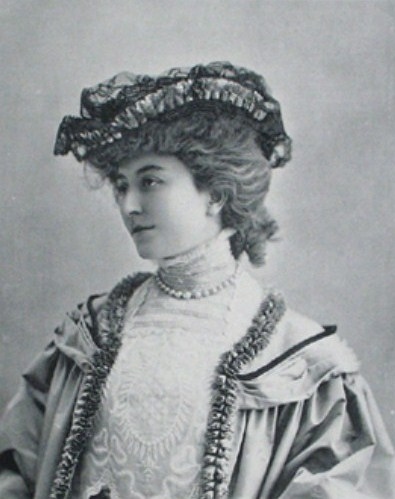

to the top
Real People

| Erik | Christine Daaé | Daroga | Vicomte Raoul de Chagny |
| La Carlotta | Comte Philippe de Chagny | La Sorelli |
| Opera Managers | Tonkin Pirates | Sultan of Turkey | Shah-in-Shah |
| The Little Sultana | The Khanom | Madame Valérius | P. de St-V. |
| La Carlotta | Comte Philippe de Chagny | La Sorelli |
| Opera Managers | Tonkin Pirates | Sultan of Turkey | Shah-in-Shah |
| The Little Sultana | The Khanom | Madame Valérius | P. de St-V. |

top of page
Tonkin pirates
Erik learned to breathe underwater using a hollow reed from the Tonkin pirates.
"He laughed and showed me a long reed.It's the silliest trick you ever saw," he said, "but it's very useful for
breathing and singing in the water. I learned it from the Tonkin pirates, who are able to remain hidden for hours in the beds of the rivers."~21 Interesting and Instructive Vicissitudes of a Persian in the Cellars of the Opera
Vietnam Indochina Tonkin Pirates Yen-Thé
The Tonkin Pirates were named after the Tonkin River in China. The Battle of Tonkin River was a major naval battle fought in northern Vietnam between the pirates of Shap Ng-tsai and the British Royal Navy with aid from the Qing Chinese navy and the Tonkinese. The 1849 expedition led to the destruction of Shap Ng-tsai's fleet and the loss of over 2,000 men. The battle occurred over a three-day period at the mouth of the Tonkin River, near present-day Hai Phong. In 1810 the government of the Qing Dynasty issued a pardon to all pirates operating in China, thousands accepted and joined the Qing navy which began the decline of piracy in the Far East. However, though many pirates chose to give up their criminal ways, thousands continued pirating along the southern Chinese coast. The pirates used war-junks and occasionally other vessels as well. Several different pirate groups were active in this time and they usually operated in mass against merchant vessels. Shap Ng-tsai was one Chinese pirate commander who attacked merchant ships in the mid 19th century. He commanded a fleet of around seventy junks working out of Tienpak.
ref. Wiki
*An official report from Tonkin, received in Paris at the end of July, 1909, relates how the famous pirate chief De Tham was tracked, together with his men, by our soldiers; and howall of them succeeded in escaping, thanks to this trick of the reeds.
"He laughed and showed me a long reed.It's the silliest trick you ever saw," he said, "but it's very useful for
breathing and singing in the water. I learned it from the Tonkin pirates, who are able to remain hidden for hours in the beds of the rivers."~21 Interesting and Instructive Vicissitudes of a Persian in the Cellars of the Opera
Vietnam Indochina Tonkin Pirates Yen-Thé
The Tonkin Pirates were named after the Tonkin River in China. The Battle of Tonkin River was a major naval battle fought in northern Vietnam between the pirates of Shap Ng-tsai and the British Royal Navy with aid from the Qing Chinese navy and the Tonkinese. The 1849 expedition led to the destruction of Shap Ng-tsai's fleet and the loss of over 2,000 men. The battle occurred over a three-day period at the mouth of the Tonkin River, near present-day Hai Phong. In 1810 the government of the Qing Dynasty issued a pardon to all pirates operating in China, thousands accepted and joined the Qing navy which began the decline of piracy in the Far East. However, though many pirates chose to give up their criminal ways, thousands continued pirating along the southern Chinese coast. The pirates used war-junks and occasionally other vessels as well. Several different pirate groups were active in this time and they usually operated in mass against merchant vessels. Shap Ng-tsai was one Chinese pirate commander who attacked merchant ships in the mid 19th century. He commanded a fleet of around seventy junks working out of Tienpak.
ref. Wiki
*An official report from Tonkin, received in Paris at the end of July, 1909, relates how the famous pirate chief De Tham was tracked, together with his men, by our soldiers; and howall of them succeeded in escaping, thanks to this trick of the reeds.

Tonkin -Yen Thé Group of Pirates of the band of Dé-Tham taken in France

Indochina Vietnam

top of page
|

to real places
|